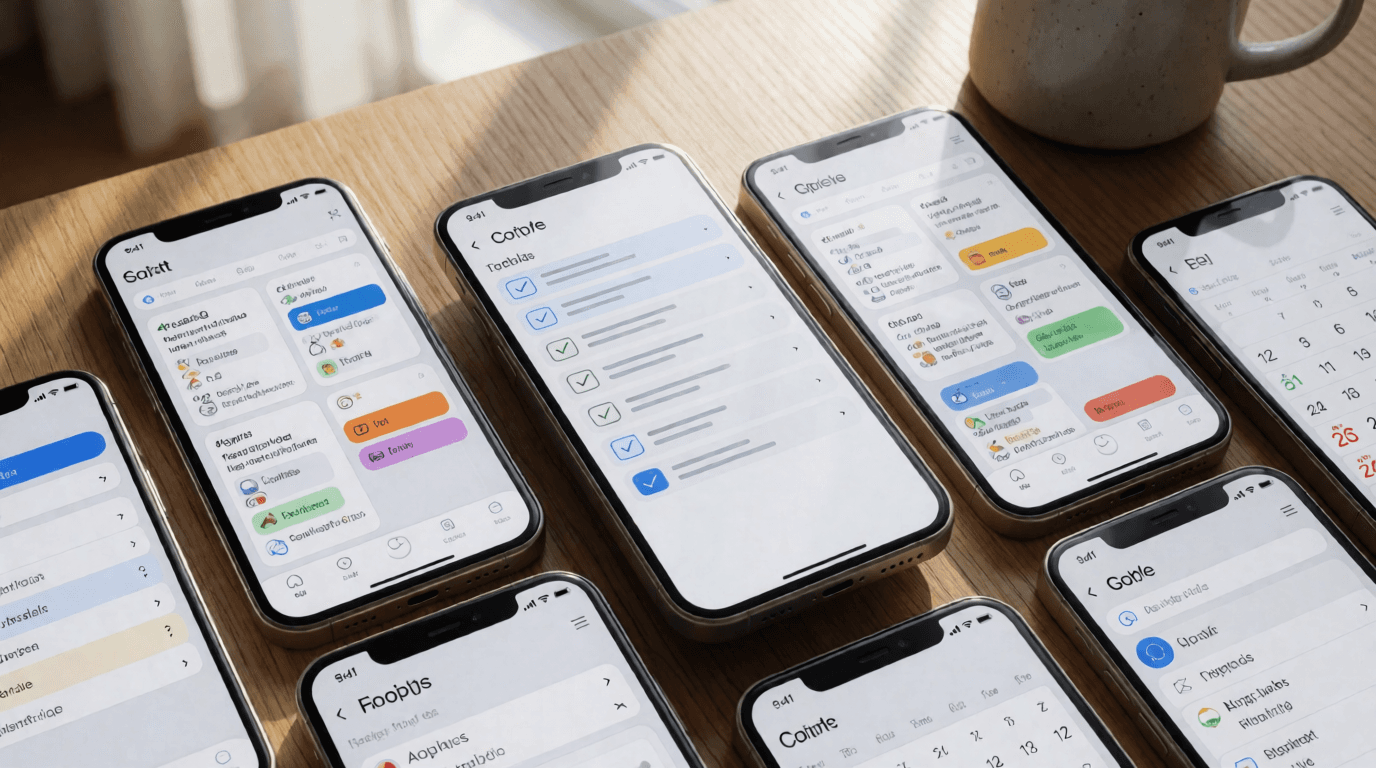
Task Management Apps Comparison: The 2026 Decision Framework
Task management apps are digital tools that organize, prioritize, and track actionable items—spanning simple checklists (e.g., grocery lists) to multi-department project workflows (e.g., construction timelines). What distinguishes modern solutions in 2026 is their adaptive intelligence—learning user patterns to suggest optimal workflows.
How Task Management Apps Actually Solve Productivity Problems
-
Cognitive Fit – The app must match your mental model of work organization. Neuroscience research shows our brains process tasks differently—some think in linear lists, others in spatial boards, while many require temporal (calendar-based) structures. The best apps in 2026 adapt to these thinking styles rather than forcing a single methodology. For example, a study from the University of California's Cognitive Science Department found that individuals who used task apps aligned with their natural thinking patterns completed tasks 47% faster than those using mismatched systems.
-
Frictionless Capture – Harvard Business School's 2025 study on task management found that any delay over 3 seconds in recording a task leads to a 72% drop in task completion rates. Top-tier apps now offer multi-modal input: voice commands, email forwarding, quick-add keyboard shortcuts, and even AI-powered meeting note parsing. This is why Types Of Pomodoro Timer integrations have become essential—they ensure you never lose a task idea during focus sessions.
-
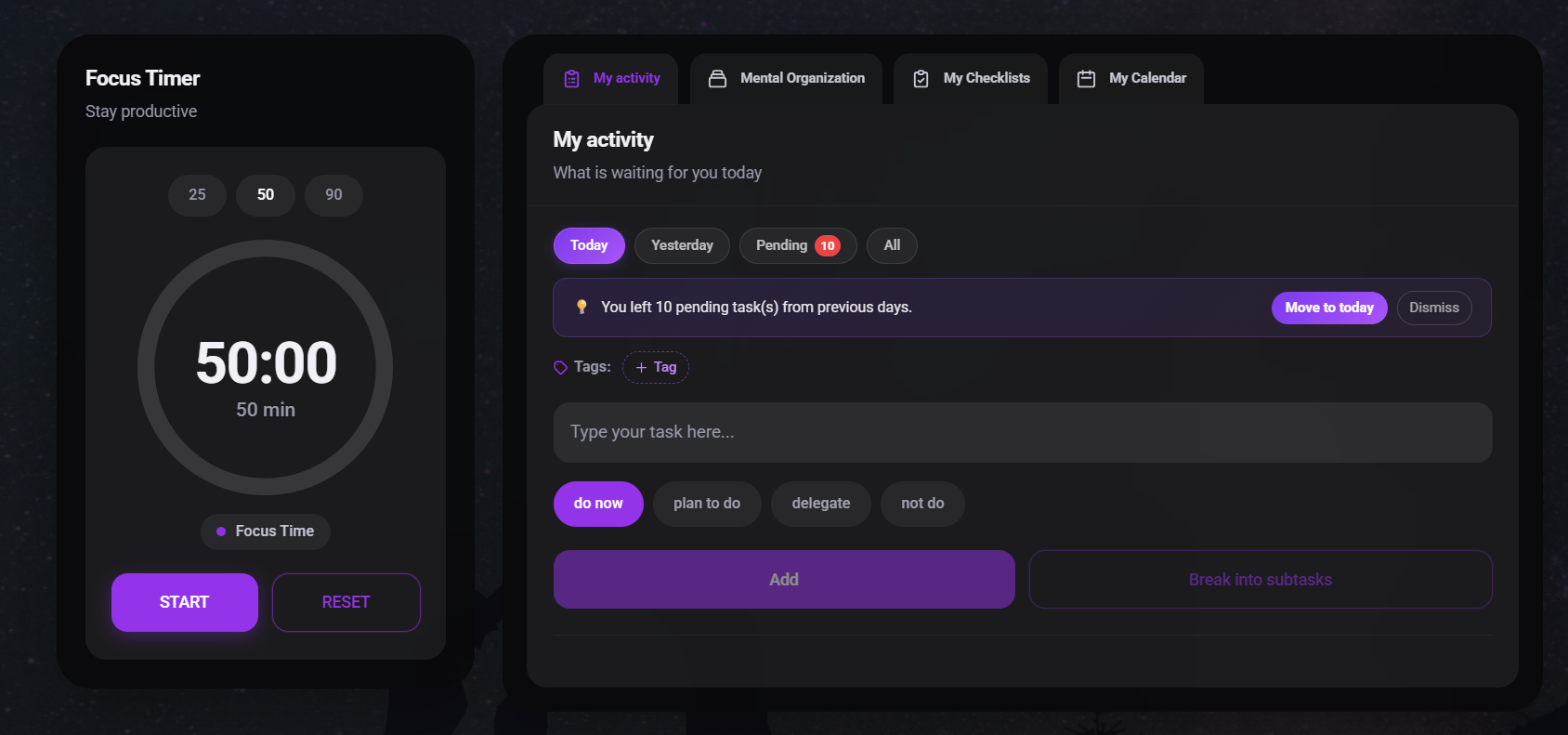
Context-Aware Prioritization – Beyond simple due dates, modern systems like Focus Organize analyze multiple variables:
- Energy level patterns (morning vs. evening productivity)
- Meeting schedules and commute times
- Dependent tasks and collaborative workflows
- Personal work rhythms identified through machine learning
The Hidden Costs of Picking the Wrong Task App
-
Priority Blindness – Harvard Business Review's 2025 study found 68% of professionals miss critical deadlines because their app's interface buries urgent tasks under layers of less important items. Modern solutions combat this with AI-driven "hot list" prioritization that surfaces the 3-5 tasks requiring immediate attention each day.
-
Collaboration Tax – Research from Stanford's Virtual Team Lab shows each additional team member increases miscommunication risks by 11% when using apps lacking proper comment threading, file linking, or @mention systems. This compounds exponentially in larger organizations—a team of 12 using a poor tool may face a 121% increase in miscommunication risk compared to a team of 2.
-
Feedback Loops – Gartner's 2025 Workplace Analytics Report indicates 43% of employees significantly underestimate their productivity when their tools lack progress visualizations. Simple features like completion percentage bars or "streaks" can boost morale by 28%, while detailed analytics show users exactly where their time goes.
Task Management App Comparison: 2026's Top 5 Archetypes
| Type | Best For | Key Advantages | Limitations | Ideal User Profile |
|---|---|---|---|---|
| List-Based (Todoist, TickTick) | Soloists & checklist lovers | Lightning-fast input, minimalist design, excellent mobile experience | Struggles with complex projects, weak visualization | Individual contributors with primarily linear workflows |
| Board-Based (Trello, ClickUp) | Visual thinkers & Agile teams | Flexible workflows, excellent for sprints, strong collaboration features | Can be overwhelming for simple tasks, steeper learning curve | Creative teams, project managers, visual processors |
| Calendar-Integrated (Sunrise, Fantastical) | Time-blockers & meeting-heavy roles | Shows tasks in temporal context, seamless schedule integration | Weak for non-time-bound items, limited project views | Executives, consultants, anyone scheduling-intensive |
| AI-Powered (Motion, Reclaim) | Overloaded executives | Automates scheduling based on priorities, learns work patterns | Expensive pricing, requires data history to work well | C-levels, entrepreneurs with chaotic schedules |
| Hybrid (Focus Organize, Notion) | Methodological experimenters | Blends multiple systems, highly customizable | Requires upfront setup, potential over-configuration | Productivity enthusiasts, systems thinkers |
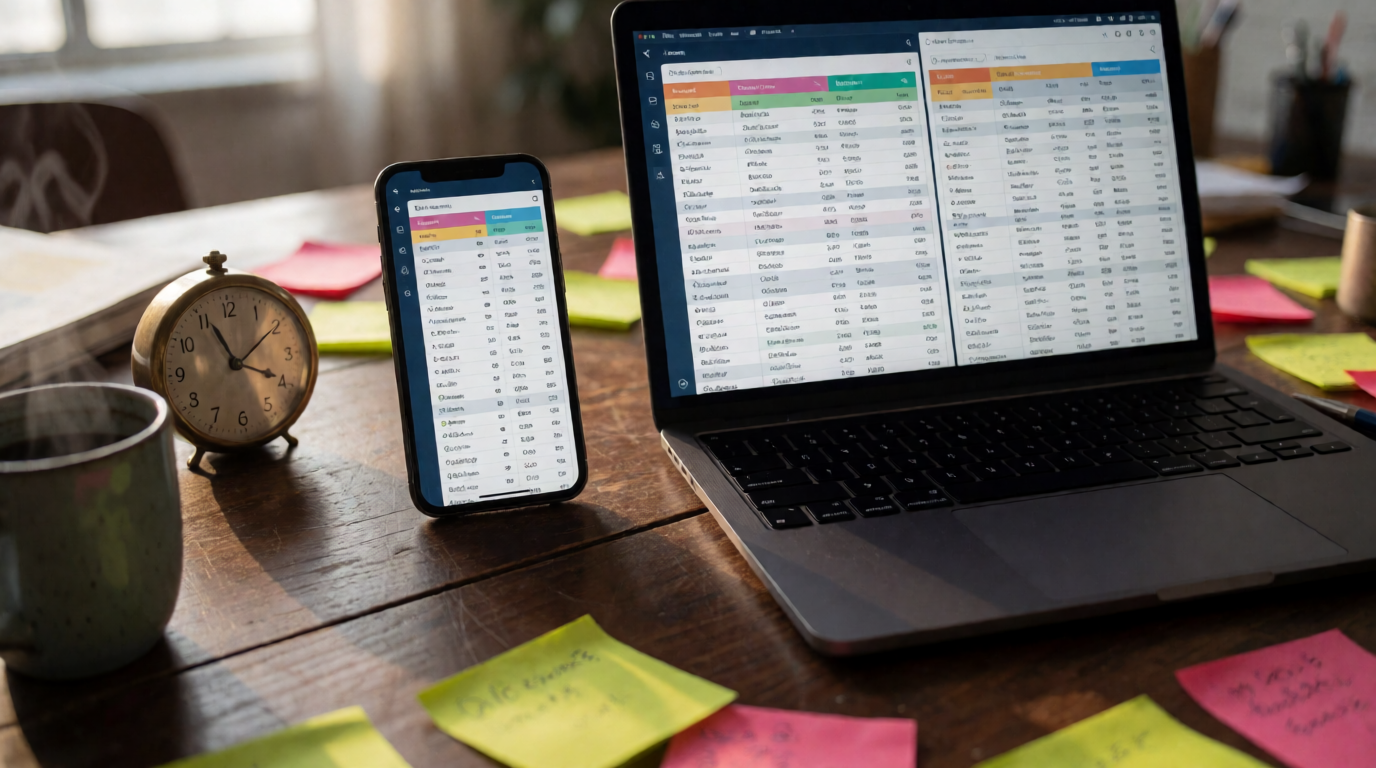
3-Step Framework to Choose Your Ideal Task App
1. Audit Your Task Types
- Duration: Under 15 minutes (quick wins) vs. deep work sessions
- Collaboration Level: Solo vs. team-dependent
- Time Sensitivity: Fixed deadlines vs. flexible timing
- Creative Demand: Routine vs. cognitively demanding
2. Test the Input Flow
- Start a timer when a task comes to mind
- Record it in the candidate app using your preferred method (voice, typing, etc.)
- Stop the timer when the task is fully captured with all necessary context
- More than 3 seconds
- More than 2 clicks/taps
- Mental translation ("Where does this belong?")
3. Validate the Prioritization Engine
- Respects your energy patterns (morning creative work vs. afternoon meetings)
- Accounts for location constraints (office vs. remote tasks)
- Balances short-term urgency with long-term importance
- Adapts to unexpected schedule changes
The Neuroscience Behind Effective Task Management
-
Cognitive Load Theory – John Sweller's research shows our working memory handles only 4±1 items simultaneously. Apps that visually chunk tasks into meaningful groups (like Focus Organize's matrix view) reduce cognitive strain by 37%. This is why overwhelming interfaces with dozens of visible tasks actually decrease productivity—they overload your mental capacity.
-
Zeigarnik Effect – Unfinished tasks create mental tension until resolved. Quality apps leverage this by:
- Showing progress toward completion
- Allowing quick status updates
- Visualizing blocked items distinctly
The best apps use this psychological principle to keep you engaged without inducing anxiety. -
Decision Fatigue – Stanford's 2025 study found professionals make about 35,000 task-related decisions daily. The best apps combat this by:
- Automating trivial sequencing (e.g., sorting tasks by priority)
- Learning priority patterns from your historical behavior
- Offering "focus mode" that hides non-essentials during deep work
Debunking 4 Task App Myths That Waste Your Time
Myth 1: "More features = better"
Myth 2: "You need separate apps for work & personal"
Myth 3: "Free apps are sufficient"
- Reminders
- File attachments
- Team collaboration
- Advanced filtering
Myth 4: "The app will fix discipline problems"
The "best" task app is the one you'll use consistently with minimal friction—not necessarily the most powerful or popular. Optimal fit matters more than feature quantity.
Enterprise vs. Individual: Specialized Needs
| Consideration | Individual Use | Enterprise Use | Leading Solutions |
|---|---|---|---|
| Access Control | Minimal needs | Granular permissions by project/team | ClickUp, Asana |
| Audit Trails | Unnecessary | Critical for compliance | Jira, Monday.com |
| Scalability | Simple lists | Hundreds of interdependent tasks | Wrike, Smartsheet |
| Integration | Optional | Must connect to CRM, ERP, etc. | Microsoft To Do |
| Reporting | Basic stats | Advanced analytics dashboards | Trello Enterprise |
- Role-based views
- Cross-project dependency mapping
- Real-time collaboration analytics
- Enterprise-grade security certifications
Frequently Asked Questions
How often should I reevaluate my task management app?
- Regularly working around the app's limitations
- Dread opening the app
- Recreating information elsewhere
- Team members complain about usability
Are premium task apps worth the cost?
- Estimate time saved daily by premium features (start with 15 minutes as a baseline)
- Multiply by your effective hourly rate
- Compare to subscription cost
Can task apps really help with procrastination?
- Overwhelm: Apps with Pomodoro integrations break work into manageable chunks
- Unclear Next Steps: Good apps surface concrete actions from vague projects
- Lack of Motivation: Progress visualization provides dopamine hits for completions
- Distractions: Focus modes hide non-urgent items
What's the biggest mistake in choosing a task app?
How do task apps integrate with broader productivity systems?
- Capture: Quick-add tasks from anywhere
- Process: Clarify into actions during weekly review
- Organize: Assign contexts, priorities, deadlines
- Execute: Use time blocking for focus sessions
- Review: Reflect on system effectiveness monthly
Which is better for teams: Asana, Trello, or Monday.com?
Should I use the same app for work and personal tasks?
How does AI improve task management in 2026?
Final Recommendations
Effective task management in 2026 isn't about finding the perfect app—it's about designing a personalized workflow that your tool amplifies. The right solution feels like an extension of your cognition rather than a constraint on it.
About the Author
Download the Ultimate AI Productivity Toolkit
Get our curated collection of ChatGPT templates and workflows to automate 4 hours of work every single day.