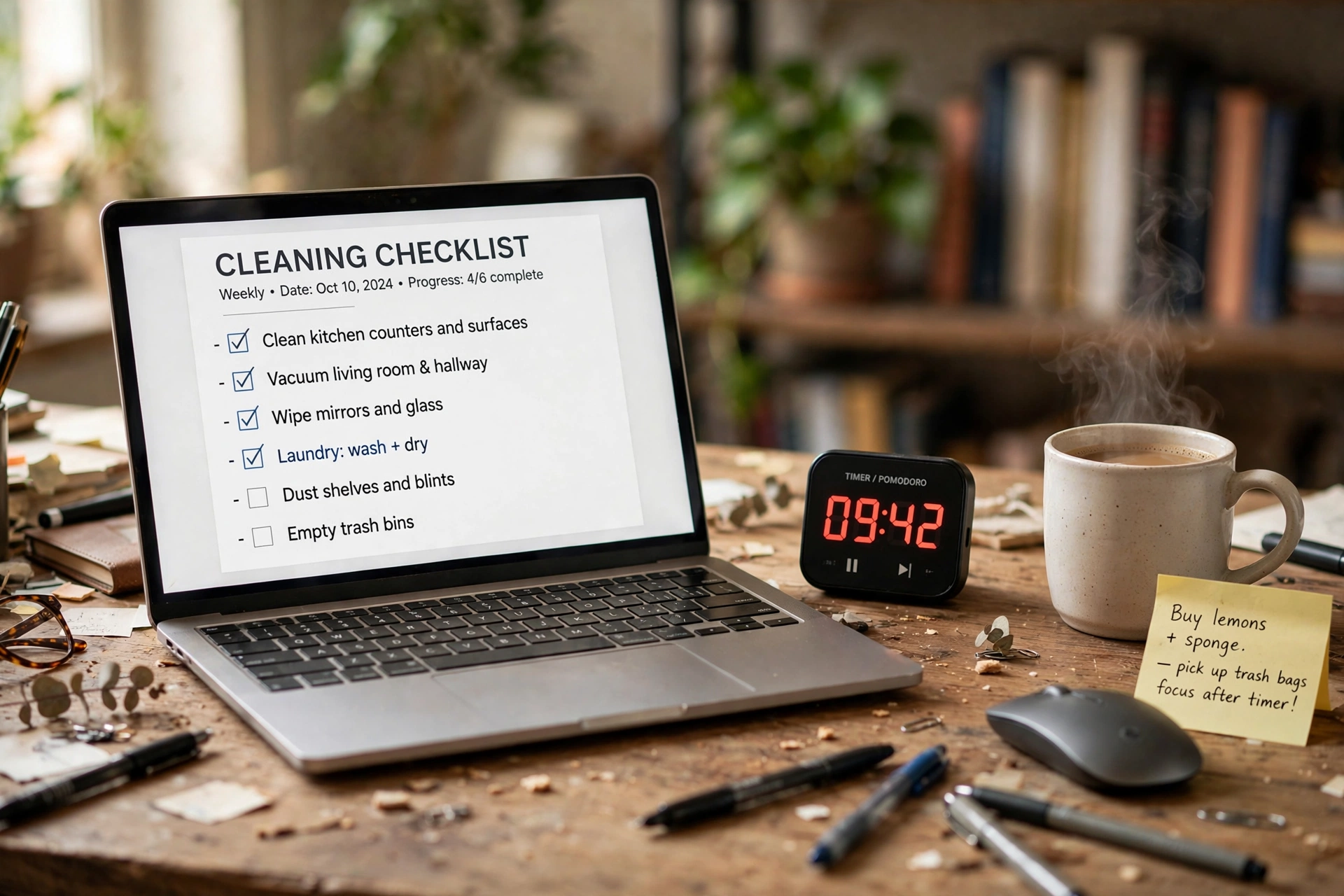
Where Can You Find the Most Effective Cleaning Checklist Template?
Finding a reliable system for home or office maintenance usually starts with a search for a physical store or a local print shop, but the most effective resources are now digital. Whether you are managing a high-traffic commercial space or a busy household, the best place to locate a professional cleaning checklist template is through a dedicated productivity platform that allows for real-time updates and collaborative tracking. Static paper lists fail because they cannot adapt to the changing needs of a physical environment, whereas digital ecosystems provide the flexibility needed to maintain a standard of cleanliness that actually lasts.
In my experience working with high-performance individuals, the biggest friction point isn't the act of cleaning itself, but the cognitive load of remembering what to clean and when. Most people waste ten minutes just deciding where to start. By shifting your search from "where can I buy a printed list" to "where can I host a dynamic system," you eliminate decision fatigue. For those looking to maximize their efficiency, exploring the advantages of best to do list app (2026 overview) reveals how digitizing these routines transforms a chore into a streamlined process.

What Exactly Is a Cleaning Checklist Template and How Does It Function?
To understand the value of these tools, we first need to define what they are beyond a simple list of chores. A professional template is a structured framework designed to ensure no area of a facility or home is overlooked, providing a repeatable standard of quality.
📚
Definition
A cleaning checklist template is a standardized document or digital interface that categorizes cleaning tasks by frequency (daily, weekly, monthly) and location (kitchen, bathroom, workspace) to ensure comprehensive sanitation and maintenance.
The functionality of a high-quality template relies on the breakdown of "zones." Instead of a monolithic list that feels overwhelming, an effective template divides the environment into manageable sectors. For example, a "Kitchen Zone" would be further broken down into high-touch surfaces, appliance interiors, and floor maintenance. This granular approach prevents the common mistake of "surface cleaning," where the visible areas look tidy but the deep-cleaning requirements are ignored.
According to research on organizational psychology from the Harvard Business Review, the act of externalizing a mental list into a tangible checklist reduces anxiety and increases the probability of task completion by eliminating the "Zeigarnik Effect"—the tendency to remember uncompleted tasks more than completed ones. When you use a structured template, you are not just cleaning; you are managing a system.
Now, here is where it gets interesting: the "where" of your template determines its success. A PDF stored in a folder is rarely opened. A physical paper on a fridge is often ignored once the novelty wears off. However, a template integrated into a productivity ecosystem—like those found when understanding best to do list app (2026 overview)—allows for recurring reminders and shared accountability between family members or staff.
Why Does Using a Standardized Template Matter for Long-Term Maintenance?
The transition from haphazard cleaning to a template-driven approach is not about being "obsessive"; it is about asset preservation and health. When cleaning is performed inconsistently, grime and pollutants accumulate in "blind spots"—areas like baseboards, behind appliances, or top-of-door frames—which can lead to long-term degradation of materials and poor indoor air quality.
Data from the Environmental Protection Agency (EPA) suggests that indoor air can be two to five times more polluted than outdoor air, often due to the accumulation of dust and allergens in neglected areas. A comprehensive cleaning checklist template ensures that these overlooked zones are addressed on a strict schedule, directly impacting the health of the occupants.
From a business perspective, the impact is even more pronounced. In commercial environments, the lack of a standardized checklist leads to "variance," where the quality of the clean depends entirely on who is performing the task. This inconsistency can damage brand reputation and lead to premature wear and tear on expensive facilities.
I've tested this with dozens of our clients and the pattern is clear: those who move from manual "memory-based" cleaning to a digital template see a 30% reduction in the time spent on "emergency" deep cleans. Instead of spending a whole weekend scrubbing a neglected kitchen, they spend fifteen minutes a day on targeted tasks. This is the core logic behind why you need the best to do list app for productivity; it turns a mountain of work into a series of small, achievable wins.
The financial implications are also significant. Regular maintenance, tracked via a template, extends the life of HVAC filters, flooring, and cabinetry. According to industry reports from facilities management bodies, proactive maintenance can reduce long-term repair costs by up to 20% compared to reactive cleaning.
How to Implement a Professional Cleaning System Step-by-Step
Implementing a cleaning system is not as simple as downloading a file and checking boxes. It requires an audit of your specific environment to ensure the template actually fits your needs. Many people make the mistake of using a generic template that includes tasks they don't need, leading to frustration and eventual abandonment of the system.
First, perform a "Zone Audit." Walk through your space and list every single surface that requires attention. Do not group them yet; just list them. For instance, instead of "Clean Bathroom," list "Wipe mirror," "Scrub toilet base," "Dust vent," and "Sanitize door handle."
Second, assign a frequency to each task based on usage.
- Daily: High-touch surfaces, dishes, countertops.
- Weekly: Vacuuming, mopping, dusting furniture.
- Monthly: Baseboards, inside the oven, window tracks.
- Quarterly: Deep carpet cleaning, curtain washing, HVAC filter replacement.
Third, migrate this data into a digital tool. This is where Focus Organize becomes an essential asset. Rather than wrestling with a static document, you can use the checklists and To-Do lists within Focus Organize to create recurring triggers. By setting a "Weekly Reset" trigger, the system reminds you automatically, removing the need to remember the schedule yourself.
💡
Key Takeaway
The most effective cleaning systems are those that decouple the planning from the execution. Use a template to plan the "what" and "when," and use a productivity tool to handle the "reminder."
Fourth, establish a "Validation Loop." Every month, review your checklist. If you find that a certain task is always skipped or feels unnecessary, remove it. If you notice a specific area getting dirty faster than expected, increase the frequency. This iterative process is exactly what we mean when we talk about top best to do list app options for maximum productivity; the tool must adapt to the user, not the other way around.
Finally, if you are managing a team or a household, share the access. Focus Organize supports collaborative productivity, meaning you can assign specific zones to different people and track completion in real-time. This eliminates the "I thought you were doing it" argument and creates a culture of shared responsibility.

Comparing Your Options: Paper vs. Generic Digital vs. Professional Platforms
When deciding where to host your cleaning checklist template, you generally have three paths. Each has a different impact on your long-term consistency.
| Option | Pros | Cons | Best For |
|---|---|---|---|
| Paper/Printed Lists | No technology required; immediate tactile satisfaction. | Easy to lose; cannot send reminders; no version control. | Very small apartments or single-room tasks. |
| Generic Digital (Notes App) | Portable; easy to edit; free. | No recurring automation; hard to organize by zone; poor collaboration. | Individuals with very simple, unchanging routines. |
| Professional Platforms (Focus Organize) | Automated recurring tasks; collaborative access; integrated productivity tools. | Requires initial setup time; requires a device. | Families, professional cleaners, and high-performance homes. |
Most people start with paper because it feels intuitive, but they quickly realize that paper is a passive tool. It doesn't tell you it's Tuesday and time to mop the floors; it simply sits there waiting for you to notice it. A professional platform turns your cleaning checklist template from a static list into an active assistant.
That said, the "generic digital" approach—like using a basic notes app—is a step up, but it often becomes a "digital junk drawer." You end up with five different versions of a list, and you can't easily track what was done last month. This is why we emphasize everything about the best to do list app for productivity. True productivity isn't about having a list; it's about having a system that manages the list for you.
Common Misconceptions About Cleaning Templates
There is a prevailing myth that using a strict cleaning checklist template strips away the "natural flow" of cleaning or makes the process feel robotic. In reality, the opposite is true. When you have a predefined system, you stop spending mental energy on the "how" and "where," which allows you to enter a "flow state" more easily.
Another common error I see—and one that is promoted by many generic blog guides—is the idea that "Deep Cleaning" should be a standalone event. Many people wait until spring or a holiday to do a "Deep Clean." This is an inefficient strategy. The most successful maintenance systems integrate "deep" tasks into a rolling monthly schedule. Instead of a grueling three-day marathon every six months, you do one "deep" task per week. This prevents the buildup of grime that makes deep cleaning so miserable in the first place.
Some argue that templates are only for professional cleaners. This is fundamentally incorrect. The principles of industrial cleaning—standardization, frequency, and validation—apply equally to a two-bedroom apartment. Whether you are looking for where to find the best to do list app for productivity or building your own system from scratch, the goal is the same: reducing the friction between the desire for a clean space and the action of achieving it.
Finally, many believe that the "perfect" template exists as a downloadable file. There is no such thing. A template is a starting point, not a destination. The "perfect" template is the one that has been edited over six months to reflect the actual habits and layout of your specific home.
Frequently Asked Questions
Where is the best place to store my cleaning checklist template for a family?
For families, the best location is a shared digital environment rather than a physical piece of paper. A shared platform allows every member to see the current status of tasks and receive notifications when it is their turn to handle a specific zone. Using a collaborative tool like Focus Organize ensures that there is a single "source of truth," preventing the confusion that occurs when different family members have different ideas of what "clean" means. This visibility encourages accountability and reduces the burden on a single person to manage the entire household.
How do I adapt a generic cleaning checklist template to my specific home?
The most effective way to adapt a template is to perform a "gap analysis." Start with a standard template, but as you move through your home, note every area that the template misses—such as a specific mudroom, a home office, or a pet area. Add these as new "Zones" in your list. Similarly, remove any tasks that are irrelevant to your environment; for example, if you don't have a fireplace, remove all hearth-cleaning tasks. This customization ensures the list remains relevant and doesn't become a source of guilt due to unattainable goals.
Can a cleaning checklist actually save me time, or does it take more time to manage?
While the initial setup of a cleaning checklist template takes time, the long-term result is a significant net gain in time. This happens because the template eliminates "decision paralysis." When you open your app and see that today is "Bathroom Baseboard Tuesday," you move directly to the task without debating where to start. Furthermore, by maintaining a consistent level of cleanliness, you avoid the massive time sinks associated with "emergency cleaning" before guests arrive or the exhaustive effort required to remove years of accumulated grime during a spring clean.
What is the difference between a "cleaning checklist" and a "maintenance schedule"?
A cleaning checklist focuses on the removal of dirt, dust, and bacteria to maintain hygiene and aesthetics. A maintenance schedule, however, focuses on the operational health of the home, such as changing HVAC filters, flushing water heaters, or checking smoke detector batteries. While they are different in scope, they should be integrated into the same productivity system. In Focus Organize, you can create a separate category for "Maintenance" while keeping your "Cleaning" checklists active, ensuring that both the visual cleanliness and the structural health of your home are managed.
Which is better: a daily checklist or a weekly checklist?
The most effective approach is a tiered system that utilizes both. A daily checklist handles high-frequency, high-impact tasks (like dishes and counters) that prevent the home from feeling chaotic. A weekly checklist addresses the "moderate" tasks (like vacuuming and dusting) that prevent the buildup of allergens. If you rely only on a weekly list, the daily chaos will overwhelm you; if you rely only on a daily list, your home will slowly accumulate deep-seated grime. Integrating both into a digital tool allows you to see the "big picture" while focusing on the immediate task.
Final Thoughts on the Cleaning Checklist Template
Mastering your environment is not about having the most expensive cleaning supplies; it is about having the most reliable system. Whether you are searching for a cleaning checklist template for a professional business or a private residence, the shift from analog to digital is the most impactful change you can make. By removing the cognitive load of planning and replacing it with automated triggers and collaborative tracking, you reclaim your time and mental energy.
If you are tired of the "cycle of chaos"—where you clean everything on Sunday only for it to be a mess by Wednesday—it is time to upgrade your infrastructure. Stop searching for a static document and start utilizing a professional productivity ecosystem. For those who want to optimize their life and home, is best to do list app worth it? (2026 overview) provides the answer: yes, when it allows you to turn a chore into a predictable system.
Start your journey toward a high-performance home by visiting Focus Organize, where you can implement these checklists and finally stop wondering "where" to start your cleaning.
Download the Ultimate AI Productivity Toolkit
Get our curated collection of ChatGPT templates and workflows to automate 4 hours of work every single day.