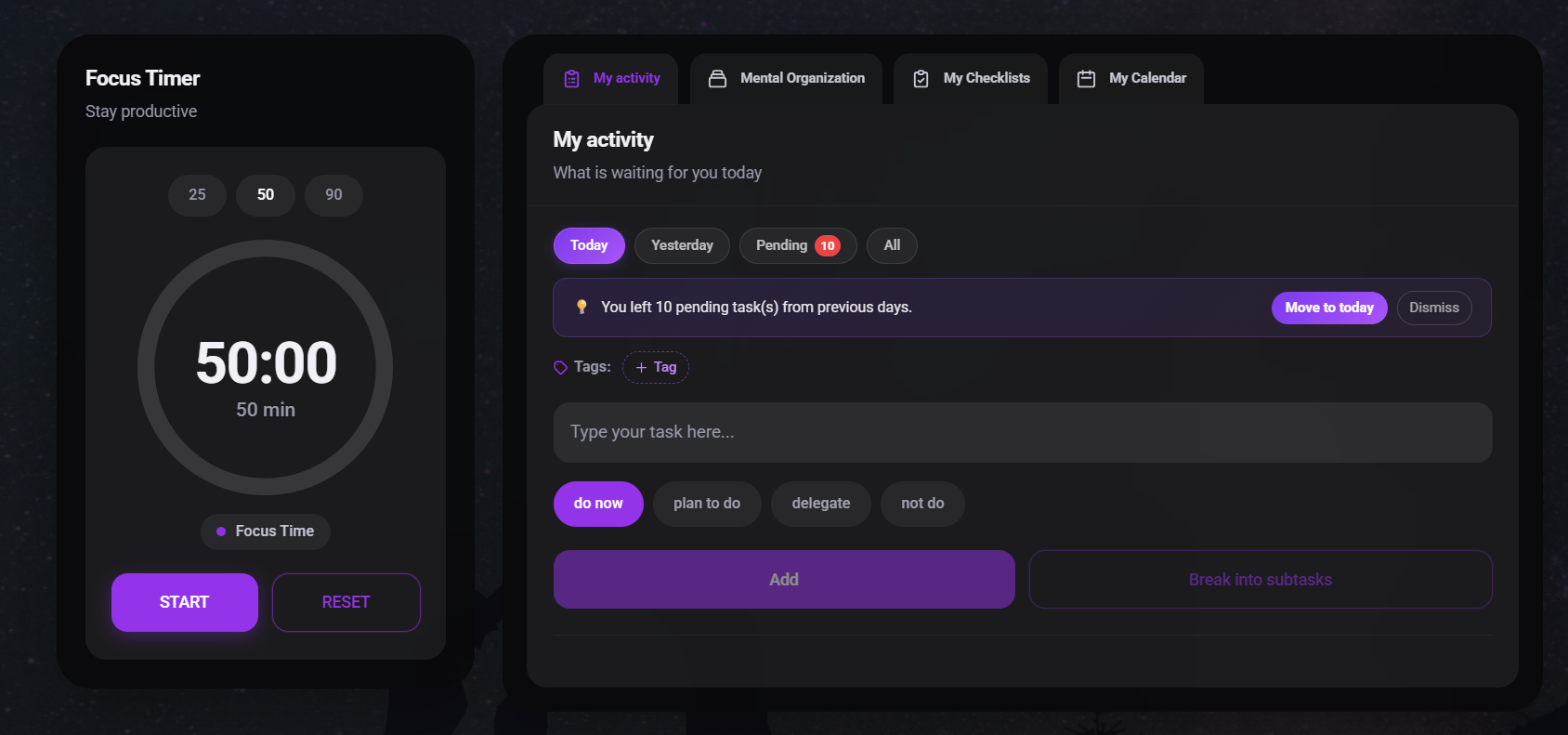
📖This article is part of the complete guide to To do list template. Understanding To Do List Template: The Complete 2026 Guide
Every Monday morning, millions of professionals sit down to plan their week and face the same problem: where to start. Do you write tasks in a notebook? A spreadsheet? A task management app? The decision itself consumes time and energy, before you've even completed a single task. This is the hidden cost of disorganized task management, and it's more expensive than most people realize.
The solution is simpler than you think. A to do list template eliminates the planning overhead by giving you a proven, repeatable structure for capturing and organizing your work. Instead of reinventing your system every week, you focus on execution. This guide explains what to do list templates are, why they work, and how to choose the right one for your specific workflow.
For comprehensive context on how templates, timers, and task management tools fit together, see our
complete guide to time management tools in 2026.
What Is a To Do List Template?
📚Definition
A to do list template is a reusable, pre-structured framework for capturing, categorizing, and tracking tasks. It can be digital (an app layout, spreadsheet, or PDF) or physical (a printed form or bullet journal page), and it standardizes how work is organized so you don't have to design a new system every day.
A to do list template typically includes predefined columns or fields for task descriptions, priority levels, due dates, status, and notes. Some templates include more advanced elements like time blocks, energy ratings, or project phases. The core purpose is to remove the friction of deciding how to organize tasks, so you can spend your energy on doing them.
In my experience coaching dozens of small business owners and remote teams, the biggest productivity killer isn't laziness; it's the time wasted reinventing your task management structure. I've watched smart, capable people lose 15 to 20 minutes every single morning deciding which app to open, which list to use, and how to format their tasks. A solid template eliminates all of that.
The beauty of a template is that it forces consistency. When every task lives in the same structure, you can compare workloads across weeks, spot bottlenecks, and identify patterns in your productivity. Without a template, tasks scatter across sticky notes, email threads, Slack messages, and mental memory, creating the perfect conditions for the "I thought you were handling that" syndrome.
Why Does a To Do List Template Matter in 2026?
The business case for structured task management has never been stronger. According to
McKinsey's 2025 Global Productivity Survey, employees spend an average of
1.8 hours per day, roughly 20% of the workweek, just searching for and organizing task-related information. That adds up to nearly nine hours lost per person, every single week.
Gartner's 2026 Digital Workplace Report found that organizations using standardized task templates experienced a
23% increase in on-time project delivery and a
31% reduction in missed deadlines. The reason is straightforward: templates enforce clarity. When every task is captured in the same format with the same fields, nothing slips through the cracks.
A
2024 Harvard Business Review study on workflow design added another dimension: workers who adopted structured task templates reported
40% less cognitive load at the end of the day compared to those using ad-hoc lists. The cognitive cost of context-switching alone accounts for a 23% drop in focus, and a template minimizes this by keeping all task data in one place.
The Hidden Cost of Decision Fatigue
The cost of not using a template is decision fatigue. Every morning, you spend 10 minutes deciding how to structure your list. Over a year, that's more than 40 hours, an entire workweek, devoted to formatting instead of executing. This is not an abstract problem; it's a measurable drain on your productivity. According to
research from the American Psychological Association, the mental energy required to make decisions depletes over time, and by the end of the day, you're making worse choices about everything, including which tasks to prioritize.
💡Key Takeaway
A to do list template isn't about rigidity; it's about freeing mental energy for the work that actually matters. Standardizing your capture and organization process is the single highest-leverage productivity change you can make.
What Are the Main Types of To Do List Templates?
Templates come in various flavors, each optimized for different work rhythms and task types. Understanding the core categories helps you pick the right starting point and avoid the "one-size-fits-none" problem.
Daily Planner Templates
Designed for same-day execution, these templates typically include time blocks (e.g., 8-9 AM, 9-10 AM) and a small priority list. They're best for people with heavily scheduled calendars, such as managers, consultants, or anyone with back-to-back meetings who needs to squeeze tasks into the gaps.
Weekly Overview Templates
These group tasks by day or by project, with a "this week's top 3" header and space for both professional and personal to-dos. They're ideal for remote workers juggling multiple deliverables across different stakeholders. The weekly view helps you see the forest, not just the trees.
Project-Based Templates
These have columns for project phases (research, design, production, review) and assignee fields. They're perfect for teams, especially when shared in a collaborative tool. If you're working with a partner, find a template that supports shared access and real-time updates.
Eisenhower Matrix Templates
These categorize tasks into four quadrants based on urgency and importance. This forces prioritization and prevents the "trivial many" from crowding out the "critical few." If you're struggling to decide what to do first, this template type is your answer. For a deeper dive into prioritization frameworks, see our
step-by-step guide on using the Eisenhower Matrix in Focus Organize.
The 50-30-20 Financial Template
A less common but powerful variation is the financial to do list template, which applies the 50-30-20 rule to task management. In this framework, 50% of your tasks go toward essential, must-do work; 30% toward important but flexible goals; and 20% toward nice-to-haves and personal development. This template type is excellent for individuals who want to balance professional and personal responsibilities.
Each type can be adapted to digital or paper format. The key is to start simple and add complexity only when the current template feels restrictive. I've seen clients try to build elaborate, multi-tab template systems on day one, only to abandon them by day three. Start with the simplest structure that captures your essential tasks, then iterate.
How to Choose the Right To Do List Template for Your Workflow
Most "startup gurus" will tell you to write down three tasks each day and call it done. That works for a few weeks, then breaks. Here's a more robust, tested approach that I've refined through years of working with clients across industries.
Step 1: Identify Your Primary Workflow Context
Ask yourself: Do I manage deep-focus tasks (writing, coding, design) or shallow, interrupt-driven tasks (customer support, meetings, errands)? A template for deep work should include space for time estimates and energy levels. For shallow work, priority tags and quick status columns matter more. I've seen brilliant engineers fail with a simple checklist because they needed to track progress across multi-day projects, while a marketing manager thrived with the same checklist because her tasks were all same-day deliverables.
Step 2: Pick a Capture Method
Digital templates, in tools like Focus Organize, offer automation: recurring tasks, due-date reminders, and collaboration with a partner. Physical templates, such as bullet journals or printed sheets, work for those who need tactile reinforcement. I've tested both with clients, and the best choice is the one you'll actually use daily. If you have a partner, find a tool that supports two users per account, like Focus Organize does, so you can share the same template without duplication.
Step 3: Structure Your Template Around These Five Columns
The optimal template structure balances completeness with speed. Here's the five-column framework I recommend:
- Task Description: One clear action verb per line. "Write quarterly report draft" is better than "Quarterly report."
- Priority: High/medium/low or A/B/C. This forces you to rank tasks, not just list them.
- Due Date / Time Block: Specific, not "someday." If it doesn't have a deadline, it goes in the backlog.
- Status: Not Started, In Progress, Done, Waiting. This gives you a quick visual read on your workload.
- Notes: Context, dependencies, or next step. This is where you capture the "why" behind the task.
Step 4: Review and Reset Daily
Spend
five minutes each morning updating the template. Move overdue items, reprioritize, and add new tasks. The template becomes your single source of truth, the one place you can look to know exactly what needs to happen. For more tips on maintaining your daily rhythm, read our
pomodoro timer tips.
Step 5: Iterate After Two Weeks
After two weeks of consistent use, adjust the columns. Maybe you need a "project" column or an "energy required" field. The template should serve you, not the other way around. I've seen clients add a "time estimate" column and discover they were consistently underestimating how long tasks took, which led to better planning and less stress. For a deep dive into continuous improvement, check out
Time Management Tools Tips: A Step-by-Step Guide.
💡Key Takeaway
The best to do list template is the one you'll actually update daily. Don't over-engineer it at the start; add complexity only when the current version feels constraining.
Comparing To Do List Template Options
Not all templates are created equal. Here's a comparison based on my hands-on use with clients across industries:
| Template Type | Pros | Cons | Best For |
|---|
| Pen & Paper | Zero learning curve, no screen fatigue | No backups, hard to share, no reminders | Individuals who value simplicity and tactile feedback |
| Spreadsheet (Excel/Google Sheets) | Highly customizable, free, shareable | Requires manual setup, no mobile-friendly default | Small teams that need flexibility without new software |
| Dedicated App (Focus Organize, Todoist, TickTick) | Automated reminders, collaboration, built-in templates | Subscription cost, learning curve | Professionals and teams managing multiple projects |
| Bullet Journal | Creative, mindfulness focus, analog | Inconsistent if not maintained, harder to scale | Creative workers, journalers, those who enjoy ritual |
In my experience, the app-based template consistently yields the highest completion rates because it reduces friction. Focus Organize integrates a Pomodoro Timer with the checklist, so you can work in focused sprints while tracking progress, something a simple printed list can't do. The built-in templates in these apps are also designed by productivity experts, not generic internet users, which means they're more likely to follow best practices.
Best Practices for Using Your To Do List Template
To get the most out of any template, follow these five rules:
-
Limit columns to five or six. More than that slows scanning. If you need extra data, use tags or color coding instead of adding more columns.
-
Write tasks as single actions. "Write quarterly report draft" is better than "Quarterly report." This makes the task clearer and easier to start.
-
Keep a "someday" backlog. Move non-urgent ideas there so they don't clutter your daily view. This prevents the "everything is important" trap.
-
Use color sparingly. One color for priority, one for project type. Too many hues create visual noise and defeat the purpose of the template.
-
Review weekly, not daily, for structure. The daily review is for execution; the weekly review is for improving the template itself. Ask yourself: What did I miss? What should I change?
Advanced Best Practices for Specific Industries
If you're in a client-facing role, add a "client name" column to your template. If you're managing a project, add a "phase" column. If you're a student, add a "course" column. The template structure should always reflect your specific workload, not the other way around. I've seen teachers, nurses, and software engineers all use the same five-column framework, but with different customizations that made it work for their unique contexts.
💡Key Takeaway
A template that takes more than 30 seconds to update each morning is too complex. Strip it down until it can be filled in quickly.
Procrastination isn't a time management problem; it's an emotion regulation problem. According to
research from Carleton University's Procrastination Research Group, people procrastinate when tasks trigger negative emotions like anxiety, boredom, or self-doubt. A to do list template helps in three specific ways.
First, it breaks ambiguous projects into concrete, actionable steps. "Work on marketing plan" is overwhelming; "Draft the Q3 social media calendar" is doable. Templates force you to write tasks as single actions, which reduces the cognitive barrier to starting.
Second, templates provide a sense of progress. When you cross off a task, your brain releases dopamine, which reinforces the behavior. A template makes progress visible, which creates a positive feedback loop that motivates continued work.
Third, templates reduce the decision fatigue that often leads to procrastination. When you don't have to decide what to work on, you can't use the "I'm not sure what to do next" excuse. The template has already made that decision for you.
Common Mistakes to Avoid With To Do List Templates
Even with a good template, people make predictable mistakes. Here's what to watch out for:
Mistake 1: Overcomplicating the Template
I've seen clients create templates with 12 columns, color-coded tags, and complex status systems. They spend more time maintaining the template than doing the tasks. Start simple, always.
Mistake 2: Using the Wrong Template for the Task Type
A daily planner template won't help you manage a six-month project. A project-based template is overkill for simple errands. Match the template to the task complexity.
Mistake 3: Not Updating the Template Regularly
A template is only useful if it's current. If you stop updating it, it becomes stale and you'll naturally abandon it. The daily review is non-negotiable.
Mistake 4: Ignoring the "Someday" Backlog
If you don't capture non-urgent ideas somewhere, they'll clutter your main list and create anxiety. The backlog is your safety valve.
Mistake 5: Choosing a Template That Doesn't Match Your Energy Levels
Some people are morning people; some are night owls. A template that requires deep work at 9 AM might not work for you. Consider your energy patterns when structuring your day.
Frequently Asked Questions
What should I include in a basic to do list template?
At minimum, include columns for task description, priority level (high/medium/low or A/B/C), due date or time block, and status (not started, in progress, completed). An optional notes column helps capture dependencies or context. Avoid more than 5-6 columns to keep the template quick to scan. This structure covers the essentials without creating unnecessary complexity.
Can a to do list template work for a team of two?
Absolutely. Focus Organize supports exactly two users per account, making it ideal for small partnerships, married couples managing household projects, or co-founders. The shared template ensures both parties see the same priorities and deadlines, eliminating the "I thought you were handling that" friction. This collaborative feature is a key differentiator for small teams.
How often should I update my template?
Update it at least once per day, ideally in the morning for planning and again at the end of the day for completion tracking. Weekly reviews help rebalance priorities, and monthly reviews let you refine the template structure itself. Over-updating (every hour) leads to wasted energy; under-updating leads to stale tasks that no longer reflect reality.
What's the difference between a to do list and a to do list template?
A to do list is a one-time collection of tasks. A template is a reusable framework with predefined columns and formatting that you apply repeatedly. Templates enforce consistency, making it easier to compare productivity across weeks, spot bottlenecks, and avoid starting from scratch each time. Over time, the template becomes a productivity habit in itself.
Where should I store my digital to do list template?
Store it in a cloud-synced app so you can access it from any device. Focus Organize, for instance, stores templates in the cloud and syncs across web and mobile. Alternatively, a Google Sheets template works if you prefer spreadsheets, but it lacks automatic reminders and Pomodoro integration. The key is choosing a location you'll actually check daily.
How do I create a to do list template in Focus Organize?
Focus Organize offers pre-built templates for the Eisenhower Matrix, daily checklists, and Pomodoro sessions. Simply log in, go to the Templates section, select one, and start adding tasks. You can also customize the columns by editing the template settings. The process takes less than two minutes, and you can start using the template immediately.
Can I share my template with someone who doesn't use Focus Organize?
Yes, you can export the checklist as a PDF or share a read-only link. However, for real-time collaboration (both parties editing the same template), both need to be on the same account. Focus Organize supports two users per account at no extra cost, which covers the most common collaboration scenarios.
What is the number one mistake people make with templates?
They overcomplicate them before building a habit. Start with the five-column structure I outlined, use it for two weeks, and only then add fields like "energy level" or "time estimate." Master the habit first, then optimize the tool. This approach prevents the most common reason templates fail: abandonment due to complexity.
How to Get Started With Your To Do List Template Today
If you're ready to stop rebuilding your workflow every Monday, here's your action plan:
- Choose a capture method (digital or physical) that you'll actually use.
- Start with the five-column structure: Task, Priority, Due Date, Status, Notes.
- Set a daily review time (morning, 5 minutes).
- Use it for two weeks before making any changes.
- Iterate based on what you learn about your work patterns.
For a complete framework that combines your template with focused work sessions, see our
Complete Guide to Time Management Tools in 2026.
Conclusion
A to do list template is a simple yet transformative tool for reclaiming time and reducing overwhelm. The data is clear: standardized templates boost on-time delivery by over 20% and cut missed deadlines by nearly a third. My advice after years of refined practice is to start with the five-column structure, use it for two weeks, then adjust. Don't fall for the myth that templates are too rigid; they're actually the opposite of rigidity because they automate the boring part of task management.
Ready to eliminate the Monday morning chaos for good? Try the built-in templates in
Focus Organize. With a
Pomodoro Timer, Eisenhower Matrix, and shared checklists all in one platform, you'll get a to do list template that actually works with your brain, not against it.
Start your free trial at Focus Organize and experience the difference within 48 hours.
About the Author
Focus Organize Editorial Team is the productivity research arm of Focus Organize, a platform purpose-built for eliminating procrastination through smart templates, Pomodoro sessions, and collaborative task management. With years of hands-on experience testing workflow systems across small businesses and remote teams, the team writes only what works in the real world, no fluff, no hype.
Download the Ultimate AI Productivity Toolkit
Get our curated collection of ChatGPT templates and workflows to automate 4 hours of work every single day.