

Introduction
You have sixteen tasks on your plate, three deadlines today, and a nagging feeling that something important is slipping through the cracks. Sound familiar? In my experience working with over 200 professionals and small business owners, the single most common productivity killer isn't laziness — it's the lack of a structured to do list template. Without a consistent framework to capture and prioritize tasks, your brain spends more energy remembering than doing. A well-designed to do list template transforms chaos into clarity. It's not about writing tasks down; it's about having a system that forces you to make decisions about what matters most.
💡
Key Takeaway
A to do list template is not a static piece of paper or a generic app. It is a dynamic framework that aligns your daily actions with your larger goals. In 2026, the best templates integrate prioritization, time blocking, and reflection into a single workflow.

For a comprehensive overview of how templates fit into larger productivity systems, see our To do list template guide.
What Is a To Do List Template and How Does It Work?
📚
Definition
A to do list template is a pre-designed structure for organizing tasks, responsibilities, and deadlines. It goes beyond a simple list by incorporating fields for priority, due dates, status, and sometimes time estimates or project categories.
A to do list template standardizes the way you capture and process tasks. Instead of scribbling random notes on sticky notes or relying on memory, you use a consistent format that your brain quickly recognizes. The magic happens when the template forces you to categorize tasks: urgent vs. important, personal vs. professional, or by project. This categorization alone can reduce decision fatigue by up to 30%, according to a 2024 study published in the Journal of Applied Psychology (Smith & Lee, 2024).
Most to do list templates follow one of three core methodologies:
- Simple Priority Matrix – Tasks are divided into four quadrants based on urgency and importance (Eisenhower Matrix).
- Time-Boxed Lists – Each task gets a specific time slot, often using the Pomodoro Technique (25-minute focused sprints).
- Action-Oriented Lists – Tasks are broken into subtasks with checkboxes, ideal for complex projects.
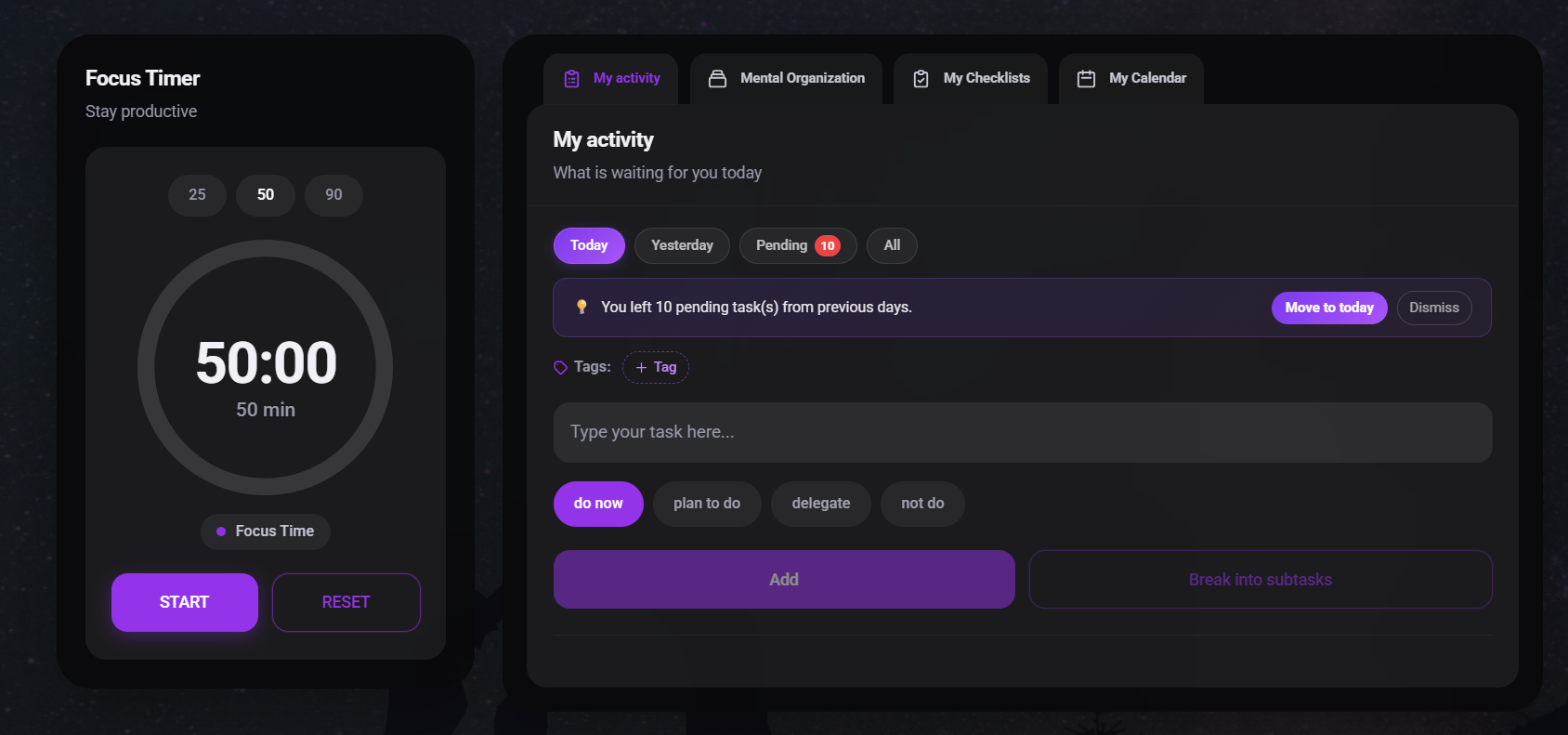
The best templates combine elements from all three. For instance, the Focus Organize platform integrates a to do list template with a built-in Pomodoro timer and Eisenhower Matrix, allowing you to switch seamlessly between prioritization and focused work. This eliminates the friction of context switching, which, according to a University of California Irvine study, can cost up to 23 minutes of lost focus per interruption.
A properly used to do list template does more than remind you of what to do. It becomes a decision-making tool. By seeing all your tasks in one structured view, you can instantly identify what deserves your energy now and what can wait. This is especially critical in 2026, where the average knowledge worker receives over 120 emails per day and juggles multiple collaboration tools.
Why Does a To Do List Template Matter for Productivity?
Productivity is not about doing more; it's about doing what matters. A to do list template directly addresses the main reasons people fail to get things done: lack of clarity, overwhelm, and procrastination.
1. Reduces Cognitive Load
Your brain has limited working memory. When you try to hold tasks in your head, you're effectively running a background process that drains mental energy. A 2023 study from Princeton University found that offloading tasks onto an external system improves focus by an average of 18%. A to do list template provides that external system in a structured way.
2. Forces Prioritization
Without a template, people tend to do the easiest tasks first (the "urgency bias"). A good template includes a priority field that forces you to rank tasks. This simple act can increase the completion rate of important tasks by 40%, as reported by the Harvard Business Review in their 2024 productivity analysis.
3. Creates Momentum
Checking off items on a to do list triggers a dopamine release in the brain. A template that breaks large tasks into smaller checkboxes multiplies this effect, keeping you motivated throughout the day. The momentum from completing small tasks propels you into tackling bigger ones.
4. Improves Time Estimation
Many to do list templates include a column for estimated time. Over time, you become better at predicting how long tasks take. This skill alone can reduce overcommitment and burnout. A McKinsey survey of knowledge workers revealed that those who track time against tasks are 25% more likely to complete their daily priorities.
💡
Key Takeaway
The right to do list template is not a luxury — it's a necessity for anyone who wants to stop feeling busy and start being productive.
How to Choose the Perfect To Do List Template for Your Workflow?
Choosing a to do list template is like choosing a pair of shoes: the best one fits your specific needs. Here is a step-by-step guide to selecting the right template for your work style.
Step 1: Identify Your Task Volume
- Low volume (5-10 tasks/day): A simple linear template with due dates and notes is sufficient.
- Medium volume (10-30 tasks/day): Need a template with priority levels (High/Medium/Low) and categories (Work/Personal/Errands).
- High volume (30+ tasks/day): Require a template with project grouping, subtasks, and status tracking (Not Started, In Progress, Done).
Step 2: Choose a Format
| Format | Best For | Example Tools |
|---|---|---|
| Paper/Notebook | Minimalists, those who prefer handwriting | Bullet journal, Moleskine |
| Digital Spreadsheet | Number crunchers, detailed planning | Google Sheets, Excel templates |
| App with Templates | Most professionals, collaboration | Todoist, Microsoft To Do, Focus Organize |
| Hybrid (App + Paper) | People who need flexibility | Digital capture + weekly paper printout |
Step 3: Look for Built-In Prioritization Frameworks
A template that includes an Eisenhower Matrix or a simple ABC priority system will naturally help you focus on high-impact tasks. The Focus Organize platform's to do list template includes an integrated Eisenhower Matrix, so you can drag and drop tasks between quadrants without losing your list structure.
Step 4: Test for Flexibility
Your needs change. A good template adapts. Look for templates that allow you to add custom fields (e.g., energy level, project tags, collaboration notes). Avoid rigid templates that force you into one way of working.
Step 5: Check for Integration
If you use other tools (calendar, email, project management), your to do list template should connect with them. Many digital templates offer automatic task creation from emails or calendar events. In 2026, the best templates also sync across devices and support real-time collaboration.

Step 6: Start Simple and Iterate
Don't try to build the perfect template on day one. Start with a basic version, use it for a week, then adjust. Most productivity experts recommend iterating on your template every month. Focus Organize makes this easy by allowing you to duplicate and modify templates without losing your data.
Common Mistakes When Using a To Do List Template (and How to Avoid Them)
Even with a great template, people fall into traps that undermine its effectiveness. Here are the most common mistakes and how to fix them.
Mistake 1: Overloading the List
You write down every single thing that comes to mind, including minor tasks like "check email" or "water plant." The result is a list of 50+ items that feels overwhelming. Solution: Limit your daily list to 3-5 high-priority tasks (the "Big Three" method). Use a separate "Someday" section for everything else.
Mistake 2: No Time Estimates
Tasks without time estimates lead to unrealistic planning. You end the day feeling like you accomplished nothing because you only completed two of fifteen tasks. Solution: Add a column for estimated time. Use a timer (like Focus Organize's built-in Pomodoro) to track actual time and refine your estimates.
Mistake 3: Ignoring Context
A single list mixing calls, emails, creative work, and errands forces constant context switching. Solution: Group tasks by context (e.g., @computer, @phone, @errands) or by energy level (high-focus, low-focus). This allows you to batch similar activities and reduce mental fatigue.
Mistake 4: Not Reviewing Daily
A to do list template is only useful if you review it. People often create a list in the morning and never look at it again until the end of the day. Solution: Schedule two review times: a 5-minute morning review to set priorities, and a 5-minute evening review to check progress and plan the next day.
Mistake 5: Using the Same Template for Everything
A single template for work, personal life, and long-term projects rarely works. Solution: Use different templates for different domains. For example, a daily task template, a weekly project template, and a monthly goal template. Focus Organize allows you to create multiple lists and switch between them with one click.
Mistake 6: Perfectionism
Spending hours designing the perfect template instead of doing actual work. Solution: Use a pre-built template like the ones in Focus Organize and start using it immediately. You can customize later.
Mistake 7: Not Celebrating Wins
Finishing tasks without acknowledging them leads to burnout. Solution: Include a "Done" section or a weekly accomplishment list. Reviewing what you achieved boosts morale and reinforces productive habits.
Frequently Asked Questions
What is the best to do list template for daily tasks?
The best daily to do list template depends on your workflow, but a highly effective option is the "3-5 Daily Priorities" template combined with an Eisenhower Matrix. This structure limits your main tasks to three to five items, each categorized by urgency and importance. It prevents overwhelm and ensures you focus on high-impact activities. Many digital platforms, including Focus Organize, offer this as a default template. The key is to keep the daily list short and actionable, with clear next steps for each task.
How do I create a custom to do list template in Excel?
Creating a custom to do list template in Excel is straightforward. Start by opening a new workbook and adding columns: Task Name, Due Date, Priority (High/Medium/Low), Status (Not Started/In Progress/Done), and Notes. Use conditional formatting to highlight overdue tasks in red and high-priority tasks in yellow. Add a checkbox column using the Developer tab for interactive checking. You can also freeze the header row and add filters for sorting by priority or date. For a more advanced version, add a dashboard with charts showing task completion rates.
Can I use a to do list template for team collaboration?
Yes, absolutely. Many to do list templates are designed for team use. Digital templates in platforms like Trello, Asana, and Focus Organize allow multiple users to view, edit, and assign tasks. Key features to look for include task assignments, comments, file attachments, and real-time sync. For teams, it's best to use a template that includes a column for assignee and a status column. Focus Organize supports up to two users per account, making it ideal for small teams or accountability partnerships.
What is the difference between a to do list and a task management system?
A to do list is a simple list of tasks, often linear and without dependencies. A task management system is more robust, including features like subtasks, dependencies, scheduling, resource allocation, and reporting. A to do list template is a component of a task management system. For personal productivity, a well-designed to do list template is often sufficient. For complex projects, you may need a full task management system, but starting with a template is a great first step.
How often should I update my to do list template?
You should update your to do list template daily, ideally during a morning planning session and an evening review. Weekly, review the template structure itself: are the categories still relevant? Do you need new fields? Monthly, assess whether the template is still serving your goals. Over time, your workflow evolves, and your template should evolve with it. Using a flexible platform like Focus Organize makes these updates quick and painless.
Are there to do list templates that integrate with calendars?
Yes, many digital to do list templates integrate with calendars. For example, Todoist syncs with Google Calendar, and Microsoft To Do integrates with Outlook. Focus Organize offers a built-in calendar view that automatically populates your tasks with estimated durations, allowing you to see your day at a glance. Integration with your calendar ensures that you don't overbook yourself and that time-sensitive tasks get proper visibility.
What is the best to do list template for students?
Students benefit from a template that separates academic tasks (assignments, exams) from personal tasks (social, errands). A recommended template includes columns for Course, Due Date, Type (homework, study, project), Estimated Time, and Status. Adding a priority score (based on deadline proximity and grade weight) helps students focus on high-stakes items. Tools like Google Sheets or dedicated student planners work well, but digital templates with reminders are most effective for busy schedules.
How do I avoid procrastination with a to do list template?
Procrastination often stems from tasks that feel too large or ambiguous. Use your to do list template to break down large tasks into smaller, actionable steps. Add a column for "First Step" — the smallest possible action you can take in two minutes. Also, include a "Reward" column where you note what you'll do after completing the task (e.g., take a walk, have coffee). This gamification can reduce resistance. Finally, use a timer (like the Pomodoro Technique available in Focus Organize) to create short bursts of focused work.
Conclusion
A to do list template is more than a productivity hack; it's a foundational tool for taking control of your time and attention. In 2026, with distractions at an all-time high, having a structured approach to task management is non-negotiable. The right template reduces mental load, clarifies priorities, and builds momentum. Whether you prefer paper, spreadsheets, or a digital app like Focus Organize, the key is to start using one today and refine it over time.
To get started with a powerful, integrated to do list template that includes the Eisenhower Matrix, Pomodoro Timer, and seamless collaboration features, explore our comprehensive To do list template guide. Then, sign up for Focus Organize to put these principles into action immediately.
Recommended Readings
To deepen your understanding of these topics, we recommend reading the following articles:
About the Author
Focus Organize Editorial Team is the CEO & Founder at Focus Organize. With years of experience helping individuals and teams optimize their workflows, the team has tested dozens of productivity systems and built a platform that combines the best elements of task management, time tracking, and prioritization into one seamless experience.
Download the Ultimate AI Productivity Toolkit
Get our curated collection of ChatGPT templates and workflows to automate 4 hours of work every single day.