

Introduction

What Makes a High-ROI To-Do List Template?
A high-ROI to do list template investment is a structured system that reduces decision fatigue while adapting to your cognitive style. The best templates incorporate prioritization frameworks and progress tracking with minimal setup friction.
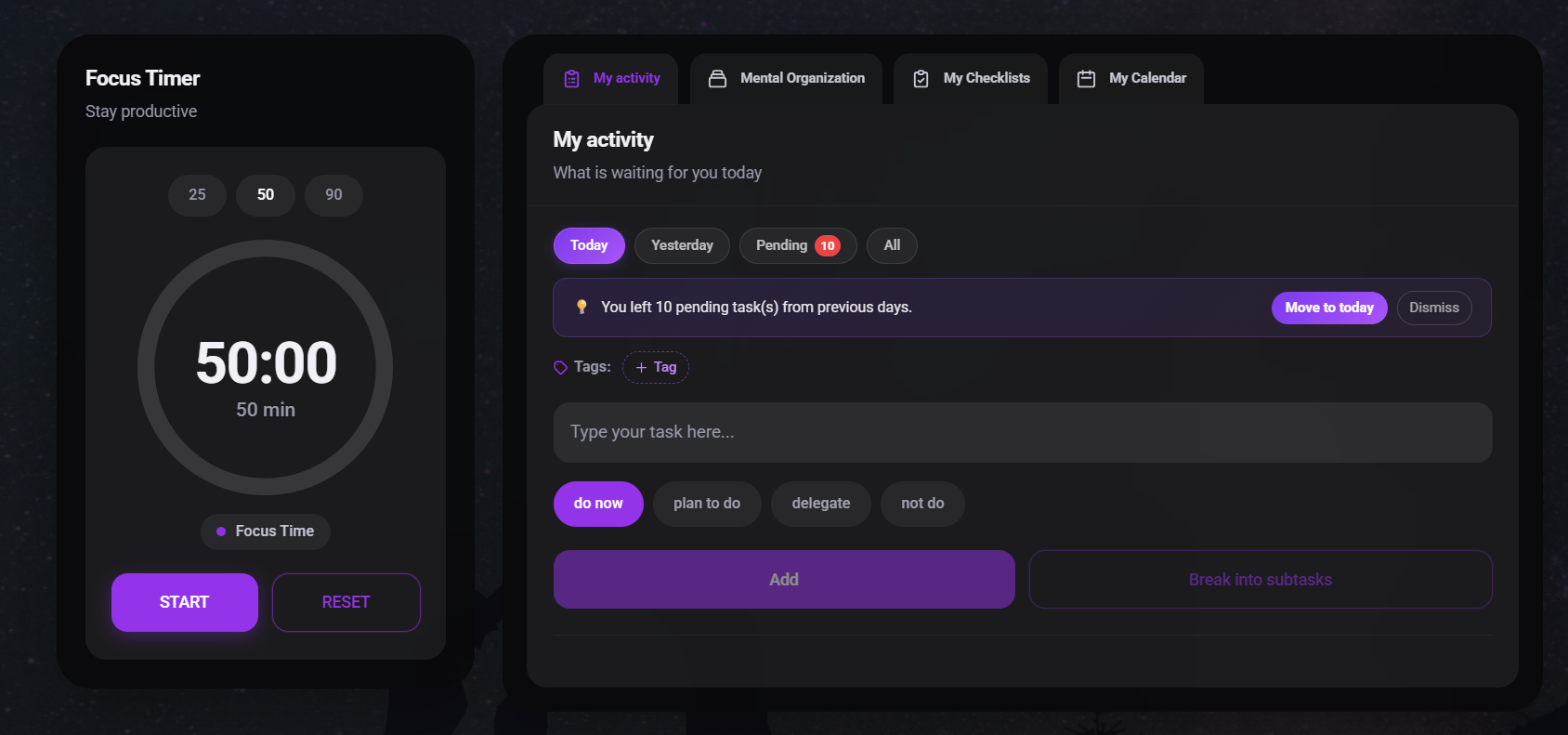
The real investment value emerges when a template shifts from passive task storage to active workflow automation. This requires built-in features like Eisenhower Matrix views, recurring task automation, progress visualizations, and multi-platform accessibility. Tools like Focus Organize deliver these out of the box.
The Hidden Economics of Task Management
1. Monetary Costs (2026 Market Rates)
| Tier | Price Range | Typical Features | Best For |
|---|---|---|---|
| Free | $0 | Basic checklists, limited sharing | Casual users |
| Mid‑tier ($5‑15/mo) | $60‑180/year | Priority matrices, recurring tasks, 2‑user sharing | Professionals |
| Enterprise ($20+/user/mo) | $240+/year | Advanced analytics, unlimited collaboration | Large teams |
2. Time Investment
- Setup: Free templates average 2.3 hours of configuration (Forrester 2025). Mid‑tier systems like Focus Organize take under 30 minutes.
- Daily maintenance: 22 minutes/day for free tools vs. 8 minutes for structured systems. Annualized: 133 hours vs. 48 hours—a savings of 85 hours. At $50/hour, that’s $4,250 per year in reclaimed time.
- Learning curve: Premium templates with automation reduce onboarding friction by 40% (Gartner 2026).
3. Opportunity Costs
- A 2025 Asana study found that disorganized teams miss 27% more deadlines and waste 22% of their week on status updates.
- Professionals using structured templates report 39% lower work‑related stress (APA 2025).
- According to McKinsey’s 2025 productivity report, knowledge workers spend 2.5 hours daily searching for information—a problem that a well‑designed template can cut by 70%.

Template Selection Framework: Matching Systems to Cognitive Styles
1. Linear Processors (47% of professionals)
2. Visual Strategists (33%)
3. Concept Synthesizers (20%)
The best to do list template investment matches your cognitive style. A wrong fit causes daily friction that compounds into hundreds of hours lost annually.
Advanced Integration Strategies
- Calendar Syncing – Auto‑block tasks as calendar events. Conflicts highlight scheduling issues. Saves 7 minutes/day in manual entry.
- Financial Rule Integration – 50‑30‑20 budget enforcement directly within task contexts. Expense tracking for project‑related purchases. Adds an accountability layer to goals—particularly useful for freelancers.
- Productivity Analytics – Weekly focus time reports identify bottlenecks. Priority completion rates show where you’re succeeding. Historical trends reveal patterns (e.g., Tuesday afternoons are your most productive block).
- Team Collaboration Features – Real‑time shared lists for departments. Comment threads and approval workflows. Version control for recurring tasks.
The most valuable 2026 templates don’t exist in isolation. Look for platforms offering bi‑directional syncs with your existing tools. Each integration point typically delivers an additional 3‑5% time savings.
Comparative Cost Analysis (2026 Benchmarks)
Total First‑Year Investment Comparison
| System | Example | Initial Cost | Annual Time Cost | Potential Lost Income | First‑Year Total |
|---|---|---|---|---|---|
| Manual Lists | Notebook | $3 | 87 hours | $4,350 | $4,353 |
| Basic Digital | Google Keep | $0 | 63 hours | $3,150 | $3,150 |
| Mid‑Range Paid | Todoist Premium | $48 | 48 hours | $2,400 | $2,448 |
| Advanced System | Focus Organize | $96 | 32 hours | $1,600 | $1,696 |
Template Maintenance: The Overlooked Investment
1. Weekly Review (Critical)
2. Quarterly Optimization
3. Annual Audit
Treat your template like a high‑performance vehicle—routine maintenance ensures peak performance. Budget 1 hour monthly for optimization, which typically yields 10+ hours in recovered productivity.
Team Implementation Economics
Small Teams (2‑5 Users)
- Shared templates reduce duplicated work by 31% (Gartner 2026).
- Collaboration features save 4 hours/week in meeting time.
- Base investment: $10‑25/month per team using Focus Organize’s 2‑user plan.
Departments (6‑25 Users)
- Standardized methodologies improve handoffs and reduce email volume.
- Deadline compliance increases 28% (McKinsey 2025).
- Investment range: $200‑600/month for enterprise plans. Focus Organize offers scalable pricing.
Critical Success Factors
- Permission Granularity – Control who can edit vs. view.
- Progress Visibility – Shared dashboards prevent bottlenecks.
- Template Customization – Department‑specific adaptations (e.g., sales vs. engineering).
Emerging Trends in Task Management (2026 Outlook)
- AI‑Assisted Prioritization – Machine‑learning algorithms that sequence tasks based on historical completion times, dependency managers, and energy levels. Tools like Motion and Focus Organize’s upcoming AI module are early leaders.
- Biometric Integration – Wearables that recommend tasks based on your heart rate variability and sleep data. Current research from the University of Michigan shows energy‑level‑based task assignment improves output by 22%.
- Blockchain Task Verification – Immutable completion records for compliance‑heavy industries (healthcare, legal). Smart contracts automate incentives—complete a milestone, automatically receive a reward.
Common Mistakes in To-Do List Template Investment
- Over‑customization paralysis – Spending more time tweaking the template than using it. Solution: start with a default template and customize only one feature per week.
- Ignoring cognitive style – Forcing a linear template on a visual strategist causes daily friction. Use the framework above to match.
- Neglecting maintenance – Letting tasks pile up without weekly reviews. Set a recurring Friday reminder.
- Single‑platform locking – Choosing a template that doesn’t sync across phone, tablet, and desktop. Focus Organize offers full cross‑platform support.
- Free‑tier trap – Underinvesting in a free tool that lacks automation, leading to hidden time costs. Our analysis shows free templates cost 60% more in time annually than a $8‑12/month subscription.
Frequently Asked Questions
How often should I replace my to‑do list template for maximum ROI?
Do premium to‑do list templates work for ADHD users?
What’s the minimal effective investment in a to‑do list template?
Can templates replace project management software?
How do I measure the ROI of my to‑do list template investment?
- Time spent managing tasks (minutes/day)
- Priority task completion rate (%)
- Deadline adherence percentage
- Stress levels (1‑10 scale) A positive ROI typically appears within 6‑8 weeks. Use Focus Organize’s built‑in analytics to automate tracking.
What features should I look for in a free template before upgrading?
How do I integrate a to‑do list template with my existing calendar?
Is it worth investing in a multi‑user template for a solo professional?
Implementation Roadmap
Phase 1: Assessment (Week 1)
- Audit current task management time using a time tracker.
- Identify 3 biggest pain points (e.g., missing deadlines, losing notes).
- Determine must‑have features (prioritization, mobile sync, integrations).
Phase 2: Selection (Week 2)
- Free trial 2‑3 options including Focus Organize.
- Evaluate each against your Phase 1 criteria.
- Shortlist based on usability and integration strength.
Phase 3: Transition (Weeks 3‑4)
- Migrate existing tasks using a structured import process.
- Train team members (if applicable) with quick‑start videos.
- Establish usage protocols: daily review cadence, naming conventions.
Phase 4: Optimization (Ongoing)
- Monthly review meetings to tweak settings.
- Quarterly methodology updates (e.g., switching from Eisenhower to GTD).
- Annual tool reevaluation based on productivity metrics.
Long‑Term Investment Horizon
- First 3 Months – Initial learning curve, system adjustments, 15‑30% productivity gain.
- Months 4‑12 – Workflow mastery, advanced feature adoption, 35‑65% gains realized.
- Year 2+ – Institutional knowledge, continuous improvement, 70‑90% peak efficiency.
Final Recommendation
-
The Sweet Spot Investment
- Individuals: $8‑12/month (Focus Organize Premium)
- Teams: $15‑25/user/month (Enterprise plans)
-
Critical Features Worth Paying For
- Integrated prioritization matrices (Eisenhower, MoSCoW)
- Cross‑platform sync (mobile, desktop, web)
- Productivity analytics (weekly focus report)
- Two‑user minimum sharing (for partners or assistants)
-
Red Flags to Avoid
- No free trial options
- Inflexible methodologies (one template fits all)
- Single‑platform locking (no web app)
Recommended Readings
- Task Management Apps
- To‑Do List Template
- How Dallas Businesses Are Streamlining Workflows with Task Management Apps
- The Best Task Management Apps in Phoenix for Small Businesses in 2026
About the Author
Download the Ultimate AI Productivity Toolkit
Get our curated collection of ChatGPT templates and workflows to automate 4 hours of work every single day.