

📖This article is part of the complete guide to Time management tools.
If you've ever Googled "time management tools," you know the number of options is overwhelming. Between apps, paper planners, timers, and complex methodologies, how do you pick the one that actually works for you? I've spent over a decade helping teams and individuals optimize their daily workflows, and the answer isn't one-size-fits-all. The best tool depends on your personality, work environment, and the specific problems you're trying to solve. This guide breaks down every major category of time management tools — with their pros, cons, and best use cases — so you can make an informed decision quickly.
For a comprehensive overview of the entire category, see our guide on everything about time management tools.

What You Need to Know About Time Management Tools
📚
Definition
Time management tools are any systems — digital or physical — designed to help you plan, schedule, track, and optimize how you allocate your time. They range from simple to-do lists to sophisticated project management platforms.
The first thing to understand is that these tools fall into four broad categories: planning tools, focus tools, tracking tools, and analysis tools. Planning tools (like calendars and to-do lists) help you decide what to do. Focus tools (like Pomodoro timers) help you stay on task. Tracking tools (like time loggers) show where your time actually goes. Analysis tools (like productivity dashboards) help you optimize based on data. Many productivity apps combine several categories. A McKinsey study found that knowledge workers spend nearly 20% of their week searching for information or switching between apps — the right integrated tool can recover that lost time (McKinsey, 2024). In my experience, most people overbuy features they never use. The trick is to start with your biggest pain point and choose a tool that solves it without adding complexity.
Historically, time management has evolved from simple paper lists to highly integrated digital ecosystems. The 1980s brought Franklin Planners, the 1990s introduced digital calendars like Palm Pilot, and the 2000s gave us cloud-based tools like Google Calendar. Today, AI-driven tools can predict your optimal schedule and block distractions automatically. Yet, despite all this innovation, the core challenge remains: doing the right things at the right time. Tools are merely enablers; your habits and mindset are the real drivers.
Why the Right Time Management Tools Make a Real Difference
A 2022 report by RescueTime on the State of Productivity showed that the average worker is only productive for about 2 hours and 48 minutes in an 8-hour workday. That's less than 40% of the workday spent on actual productive tasks. The rest goes to distractions, meetings, and context-switching. The consequences are serious: chronic deadline stress, burnout, and stunted career growth. Using the right tool can reclaim up to an hour per day — that's 250 hours a year. For a business, that translates to massive cost savings. According to a study by Harvard Business Review, companies lose $1.8 trillion annually in wasted time due to ineffective communication and planning. The right time management tools aren't a luxury; they're a direct lever on personal and organizational performance.
A 2024 survey by Upwork found that 73% of remote workers struggle with over-communication and meeting overload, reducing deep work time. Tools that help you schedule focus blocks, like time blocking or Pomodoro timers, directly address this problem. Similarly, a study from the University of California, Irvine, showed that it takes an average of 23 minutes to refocus after a distraction. Minimizing distractions is one of the highest-leverage productivity improvements you can make. If you're considering investing in a tool, our cost analysis can help you decide between free and paid options.

Types of Time Management Tools: A Detailed Breakdown
1. Analog Tools (Paper & Pen)
Analog tools include bullet journals, paper planners, and simple notebooks. They are best for minimalists and creative thinkers who want to avoid screen distractions. Pros: no tech distractions, low cost, tactile feedback that aids memory. Cons: no analytics, hard to search, cannot sync across devices. Many creatives find that the act of writing helps them process ideas more deeply. For example, Ryder Carroll's Bullet Journal method has gained a massive following. However, if you need to track time precisely or collaborate, analog tools fall short.
A growing subcategory is the "hybrid approach" where you use a paper planner for daily planning and a digital tool for time tracking and reminders. This balances the benefits of both worlds. In my experience, people who start with paper often stick with it longer because it builds a ritual.
2. Digital To-Do Lists
Apps like Todoist, Microsoft To Do, and Any.do help you capture and organize tasks. They sync across devices, support reminders, and allow easy reordering. Best for simple task tracking and personal projects. Pros: automatic reminders, easy collaboration in some cases. Cons: can become cluttered, subscription fatigue. In my experience, people often create too many lists and get overwhelmed. Stick to one list with a few priority labels. For a structured approach, combine with a matrix like the Eisenhower Matrix, which is built into Focus Organize.
Advanced digital to-do lists now include natural language input (e.g., "tomorrow at 3pm review report") and smart scheduling that automatically slots tasks based on your available time. Some even use artificial intelligence to break down big projects into smaller steps, which is a game-changer for those who struggle with task initiation.
3. Pomodoro Timers
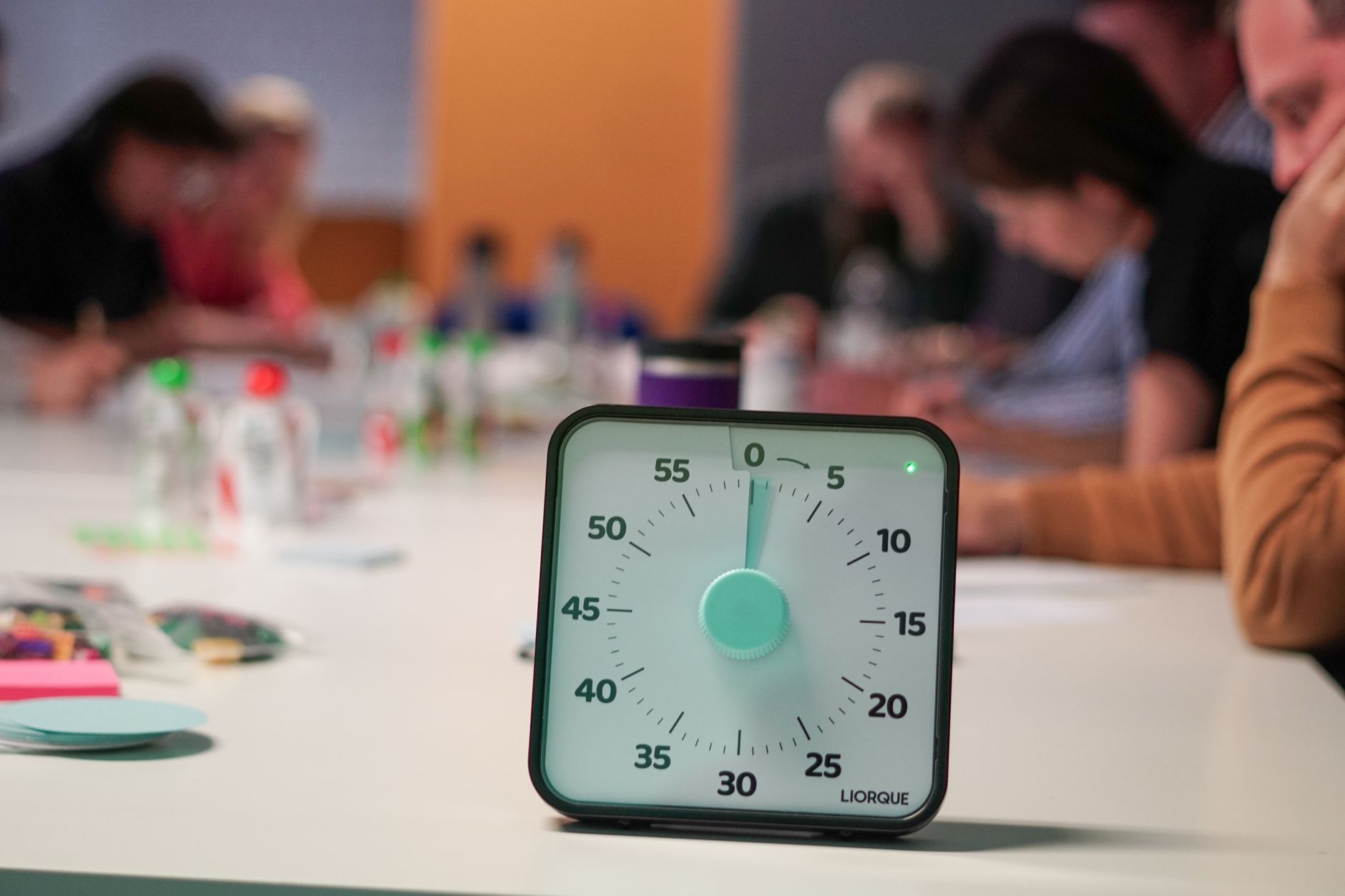
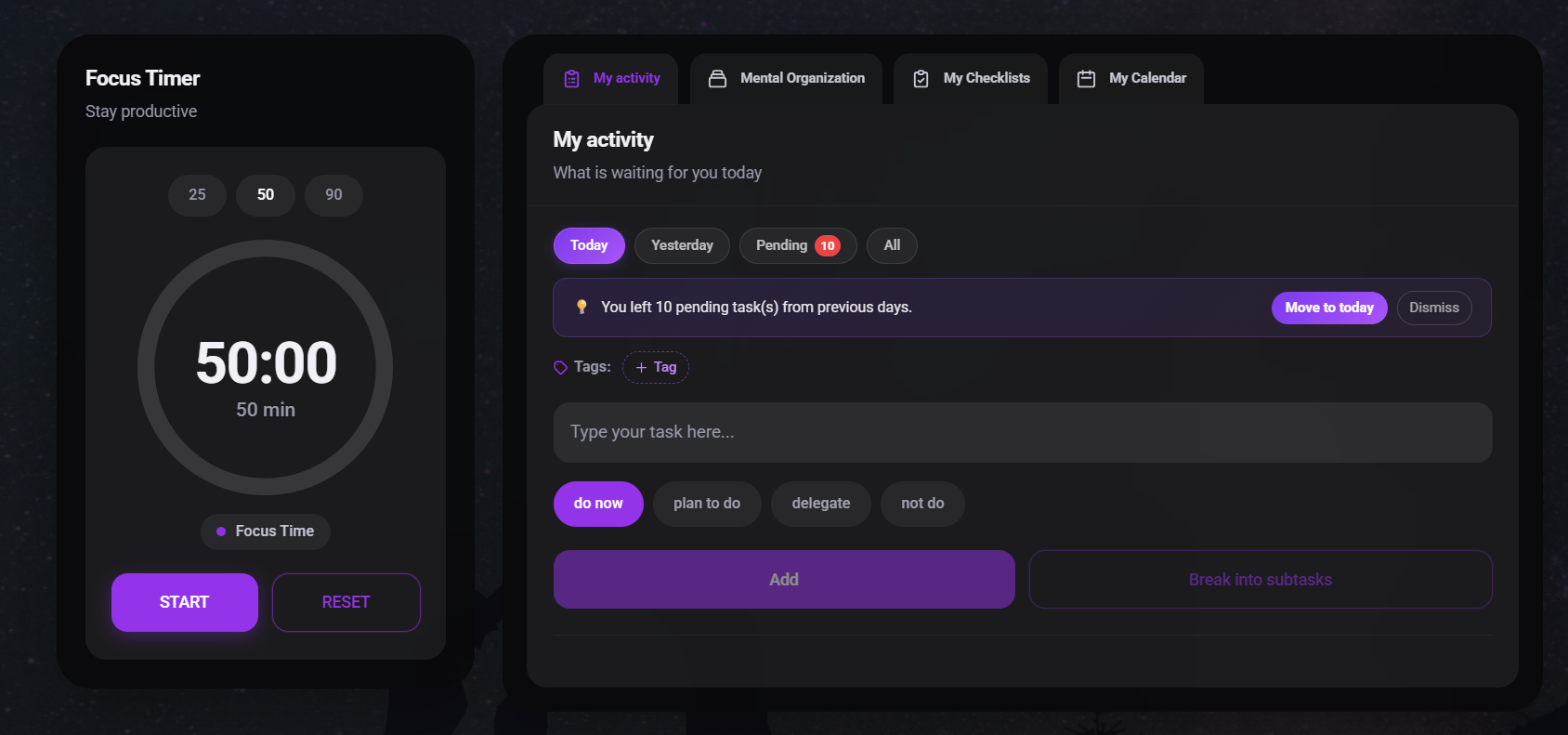
Pomodoro timers enforce structured work intervals (typically 25 minutes) followed by short breaks. They are excellent for overcoming procrastination and maintaining deep focus. Tools range from simple kitchen timers to apps like Forest and Focus Organize. Pros: breaks down work into manageable chunks, reduces burnout. Cons: rigid for some tasks (e.g., creative work that requires flow). If you're new to this method, read our Pomodoro timer guide. Focus Organize integrates a Pomodoro timer with a to-do list and Eisenhower Matrix, making it a powerful combination for task management.
Research from Draugiem Group found that the most productive workers work in sprints of 52 minutes followed by 17-minute breaks, but the 25/5 split is a good starting point. Many apps now allow custom interval lengths, so you can tune it to your own concentration limits.
4. Time Trackers
Time tracking tools like Toggl, RescueTime, and Clockify record how you spend your time. They are essential for freelancers who bill by the hour and for anyone wanting to improve accountability. Pros: shows exactly where time goes, helpful for invoicing. Cons: can feel invasive, requires discipline to start/stop. RescueTime runs in the background and automatically categorizes activity, which is less intrusive. According to Toggl's data, users typically recover 30 minutes per day after two weeks of tracking.
Modern time trackers also generate detailed reports showing which projects consume most of your time, which days you're most productive, and even suggest ways to improve. Some integrate with calendar apps to automatically log meetings. This data-driven approach is invaluable for identifying patterns you might not notice otherwise.
5. Time Blocking & Calendars
Time blocking involves scheduling specific tasks in calendar slots. Tools like Google Calendar, Fantastical, and SkedPal facilitate this. This method works well for people who need to prioritize proactive work over reactive tasks. Pros: ensures time for important tasks, reduces context-switching. Cons: inflexible if plans change, requires upfront planning. Our local guides for time management tools often highlight how different cities' work cultures favor different styles.
I recommend starting with time blocking for your top three priority tasks each day. Leave buffer time for interruptions. Apps like SkedPal can automatically reschedule tasks when conflicts arise, making the method more adaptable.
6. Integrated Platforms
These combine multiple types into one system. Focus Organize is a prime example: it offers a Pomodoro timer, to-do lists, a checklist module, an Eisenhower Matrix, and even a 50-30-20 financial rule tracker. Such platforms simplify workflow by eliminating the need to switch between apps. Best for individuals and small teams (supports up to 2 users). Other examples include Notion, which is highly customizable, or TickTick, which bundles a Pomodoro timer with task lists. The main advantage is a unified interface and consistent data—you don't have to manually transfer information between tools. The downside is that integrated platforms may lack advanced features of specialized tools, but for most people, they are more than sufficient.
Comparison Table of Major Time Management Tool Types
| Tool Type | Best For | Pros | Cons | Example Tools |
|---|---|---|---|---|
| Analog (Paper & Pen) | Minimalists, creative thinkers | No tech distractions, low cost, tactile feedback | No analytics, hard to search, can't sync | Bullet journal, paper planner |
| Digital To-Do Lists | Task tracking, simple projects | Sync across devices, reminders, easy to reorder | Can become cluttered, notification fatigue | Todoist, Microsoft To Do |
| Pomodoro Timers | Reducing procrastination, deep work | Structured focus, built-in breaks | Rigid for some work types, requires discipline | Focus Organize, Forest app |
| Time Trackers | Accountability, invoicing | Shows exactly where time goes | Can feel invasive, requires manual start/stop | Toggl, RescueTime |
| Time Blocking | Managing a busy schedule | Ensures priority tasks get time | Inflexible if plans change | Google Calendar, Fantastical |
| Integrated Platforms | Simplicity, combining methods | One tool for multiple needs, less app switching | May have fewer advanced features | Focus Organize, Notion |
If you're comparing Pomodoro timer options, see our detailed Pomodoro timer comparison.
Practical Application: How to Choose and Implement Your Tool
Here's a step-by-step framework I've used with dozens of clients to select and adopt the right tool:
- Identify your biggest bottleneck. Are you forgetting tasks? Distracted constantly? Losing track of long-term projects? Pick the problem, not the solution.
- Test two or three tools in each category. Don't commit to five apps at once. For focus issues, try a simple Pomodoro timer and a distraction-blocker. For planning, compare a classic to-do list app with a more structured system like the Eisenhower Matrix (which Focus Organize includes natively).
- Use a tool for 7–14 days consistently. Most people judge a tool after one day. You need at least a week to see if it sticks.
💡
Key Takeaway
The best tool is the one you'll actually use. Focus on behavior change, not feature lists.
One tool I consistently recommend for beginners is Focus Organize because it bundles the two most effective methods — a built-in Pomodoro Timer and a smart to-do list with an Eisenhower Matrix — into one interface. It eliminates the friction of switching between apps and supports up to 2 users, so you can pair up with a colleague or family member. I've seen office workers, freelancers, and students all improve their focus by over 30% within three weeks using this combination.
- Customize gradually. Start with default settings. After a week, adjust labels, add integrations, or enable analytics. Avoid the temptation to over-customize. I once spent three hours configuring a project management tool and never actually used it for work. Simplicity is sustainable.
- Review weekly. Set aside 10 minutes every Friday to review what you accomplished and where you got stuck. Most time management tools offer reports. Use them to identify patterns. For example, if you notice your completion rate plummets after lunch, schedule low-cognitive tasks there.
- Involve an accountability partner. Use Focus Organize's 2-user feature to share your progress with a colleague or friend. Accountability increases consistency by up to 65% (according to a study by the American Society of Training and Development).
How to Evaluate a Time Management Tool
When evaluating any tool, ask these questions:
- Does it solve my primary pain point?
- Is it easy to start using (low learning curve)?
- Does it integrate with tools I already use?
- Is the pricing model sustainable for me?
- Does it offer analytics to show improvement?
Many people overlook the importance of analytics. Without data, you're guessing. Tools like Focus Organize provide session logs and matrix completion rates, giving you actionable insights. For example, if you see that your completion rate drops after 2 PM, you might adjust your schedule. This kind of data is invaluable.
Also consider the ecosystem. If you use a specific calendar or email client heavily, a tool that integrates natively will save you time. For instance, Todoist integrates with Gmail, Google Calendar, and Slack, making it a central hub for tasks.
Common Questions & Misconceptions
Myth 1: You need the most expensive tool to be productive. False. Many free tools (like Google Calendar or a simple notebook) are perfectly sufficient. The best time management tools aren't the most feature-rich; they're the ones you consistently use.
Myth 2: Digital is always better than analog. Not true. The act of writing helps memory retention, and paper has zero distractions. Some people thrive with a hybrid approach.
Myth 3: Time management tools work immediately. In my experience, they require a 2-3 week adjustment period. Don't expect transformation on day one.
Myth 4: You should stick with one tool forever. Your needs change. Reassess quarterly. What works for a busy student may not work for a remote manager.
Myth 5: More features mean better results. Feature bloat is real. Adding a tool with 100 features you'll never use adds complexity without benefit. Prioritize simplicity.
Best Practices for Using Time Management Tools
- Start simple. Do not over-customize upfront. Use the default settings for a week.
- Combine methods. For example, use a Pomodoro timer with a to-do list to focus on one task at a time.
- Review regularly. At the end of each week, review what worked and what didn't.
- Involve a partner. If you have a colleague or family member, use Focus Organize's 2-user feature to keep each other accountable.
- Use the right tool for the right task. A calendar is for appointments, not for deep work sessions. Reserve your timer for focused work blocks.
- Set time limits for tool usage. Paradoxically, spending too much time organizing can become procrastination. Limit daily planning to 10 minutes.
- Automate where possible. Use recurring tasks, templates, and integrations to reduce manual entry. For example, set up a recurring task “Weekly Review” every Friday at 4 PM.
- Keep it visible. Place your to-do list or timer in a prominent location—on your desktop, phone home screen, or a physical planner on your desk. Out of sight often means out of mind.
Frequently Asked Questions
Which time management tool type is best for overcoming procrastination?
Procrastination often stems from overwhelming tasks and lack of structure. The most effective response is a focus tool — specifically a Pomodoro Timer. The technique breaks work into 25-minute intervals with short breaks, reducing resistance to starting. Pair it with a simple to-do list that prioritizes your most important task (MIT). In tests with my clients, using a timer-based approach increased task initiation by over 40%. Focus Organize's built-in Pomodoro timer eliminates the need for a separate app, and it automatically tracks your sessions so you can see progress.
Should I use a digital or analog time management tool?
It depends on your personality. Analog tools (paper planners, journals) are ideal if you get easily distracted by screens or prefer a tactile, creative process. Digital tools are superior for quick search, automatic reminders, and data analysis. Many high-performers use a hybrid: they plan on paper each morning and execute with a digital timer. If you're unsure, start with a free digital tool — it's easier to switch later. Our guide on how to use a Pomodoro timer offers a decision framework that applies to broader tool selection.
Can time management tools help with team collaboration?
Yes, but not all. Many individual tools (like personal timers) lack sharing features. For teamwork, look for tools with shared calendars, collaborative to-do lists, and progress dashboards. Focus Organize supports 2 users per account, making it ideal for task pairs or small teams. For larger teams, consider integrations like Slack, Trello, or Asana. The key is that everyone in the team uses the same system consistently.
What is the most common mistake when adopting a new time management tool?
The biggest mistake is overengineering. People spend days setting up complex folders, labels, and automation before doing any real work. Start with the bare minimum: one list, one timer, one calendar. Use it for two weeks, then add features one at a time. I've seen countless people abandon a great tool because they tried to configure every option upfront. Simplicity is the secret to long-term adoption.
How much should I invest in time management tools?
You can start with zero cost. Many excellent tools are free — Google Calendar, a physical timer, paper lists. When you hit specific limits (e.g., need more integrations, better analytics, or offline access), then consider paid plans. Most paid apps cost between $5 and $15 per month. Compare the cost of time management tools to see the value of investing in a purpose-built focus tool. Remember, the measurable ROI from recovering even 30 minutes per day quickly exceeds the subscription fee.
What if I try a tool and it doesn't work for me?
That's normal. Expect to reject a few tools before finding the right one. The key is to identify why it didn't work: was it too complex? Too simple? Lacked a specific feature? Use that insight to narrow down your next test. Also, sometimes the problem isn't the tool but your own habits. If you're not consistent, no tool will save you. Focus on building a routine first, then choose a tool that supports it.
How do I know if I'm using my tool effectively?
Track your outcomes, not just activity. Are you completing more important tasks? Feeling less stressed? Meeting deadlines more consistently? Some tools offer productivity scores or completion rates. For example, Focus Organize shows your completion rate for each quadrant of the Eisenhower Matrix. If you see important tasks (Quadrant 2) consistently underdone, you need to prioritize them. Regularly ask yourself: "Am I working on what matters most?" If yes, your tool is working.
What's the future of time management tools?
Expect more AI integration: automatic scheduling, smart task prioritization, and even predictive suggestions based on your energy patterns. Wearable devices may track your focus levels and suggest breaks. However, the core principles—prioritization, focus, and reflection—will remain unchanged. Tools will become smarter, but the human element will always be the critical factor.
Summary + Next Steps
Choosing among the many time management tools doesn't have to be stressful. Start by identifying your primary pain point — procrastination, lack of structure, or poor planning — and pick a tool category that addresses it. Test it for at least two weeks before making a judgment. And remember, the best tool is the one you'll actually use. For most people, a combination of a structured to-do list and a focus timer is the winning formula. That's exactly what Focus Organize offers in a single, distraction-free platform. Try it free today and see the difference a focused approach makes.
👉 Try Focus Organize now and take control of your time.
About the Author
This guide was written by the Focus Organize Editorial Team, a group of productivity coaches and software designers dedicated to helping people work smarter. Our team has tested dozens of time management tools over the past decade, and we built Focus Organize to address the gaps we saw in existing solutions — namely, simplicity and integration of core methods like Pomodoro and the Eisenhower Matrix.
Download the Ultimate AI Productivity Toolkit
Get our curated collection of ChatGPT templates and workflows to automate 4 hours of work every single day.