

📖This article is part of the complete guide to Pomodoro timer.
What Is a Pomodoro Timer?
📚
Definition
A pomodoro timer is a digital or physical timer that implements the Pomodoro Technique — a structured work/break cycle designed to optimize concentration and rest.
If you've ever struggled to stay focused on a task or felt mentally drained after just a few hours of work, you're not alone. A pomodoro timer offers a simple yet powerful solution. At its core, it's just a countdown timer — but its method transforms how you approach work.
The technique was developed by Francesco Cirillo in the late 1980s, when he used a tomato-shaped kitchen timer ("pomodoro" means tomato in Italian) to commit to short bursts of study. He found that breaking work into 25-minute chunks with scheduled breaks dramatically improved his ability to concentrate and retain information. Today, the pomodoro timer is used by millions worldwide, from college students to CEOs.
But why does this seemingly simple timer matter so much? According to a 2018 study published in the Journal of Applied Psychology, short breaks during prolonged tasks help maintain focus and prevent the decline in performance that typically occurs after extended work sessions (Lim & Kwok, 2018). The pomodoro timer operationalizes this science into a repeatable habit.
In my experience coaching remote teams, the biggest productivity killer isn't laziness — it's cognitive overload. When you sit down to "work for hours," your brain anticipates exhaustion and rebels. The pomodoro timer removes that pressure by promising a break in just 25 minutes. It rewires your relationship with time.

Why the Pomodoro Timer Makes a Real Difference
Here's the thing: most productivity advice is about doing more — work longer, batch tasks, grind until it's done. The pomodoro timer flips that script. It's about working smarter by honoring your brain's natural attention span.
The human brain is not designed for sustained, non-stop focus. Research from the Draugiem Group (using the Desktime app) found that the most productive employees worked for 52 minutes, then took a 17-minute break — a pattern that mirrors the pomodoro's rhythm but with slightly different ratios. The key takeaway is that high performers intersperse focused work with rest.
Statistics that back this up:
- A study from the University of Illinois found that brief diversions from a task dramatically improve one's ability to focus on that task for prolonged periods (Ariga & Lleras, 2011).
- According to a survey by RescueTime, knowledge workers spend only 2 hours and 48 minutes per day on productive work — the rest is eaten by distractions, shallow tasks, and lack of structure.
- The average office worker is interrupted every 11 minutes, and it takes over 23 minutes to fully regain focus (UC Irvine informatics study).
- A 2023 report by McKinsey estimated that improving time management practices could boost productivity by 20–30% in knowledge-intensive industries.
Consequences of not using structured focus:
- Chronic task-switching lowers IQ by up to 10 points (University of London study).
- Multitasking can reduce productivity by as much as 40% (American Psychological Association).
- Unstructured work leads to decision fatigue and burnout, as highlighted by a 2024 Gallup study showing that 76% of employees experience burnout at least sometimes.
The pomodoro timer acts as a forcing function. It tells you: "For the next 25 minutes, this is your only reality." This single-tasking approach has been shown to increase depth of work and reduce the mental cost of switching.
To combine the pomodoro timer with a structured task list, try our To Do List Template in San Francisco — perfect for planning your pomodoros.
How to Use a Pomodoro Timer: A Step-by-Step Guide
Using a pomodoro timer is deceptively simple, but there are nuances that separate success from frustration. Here's how to do it right.
Step 1: Choose Your Timer
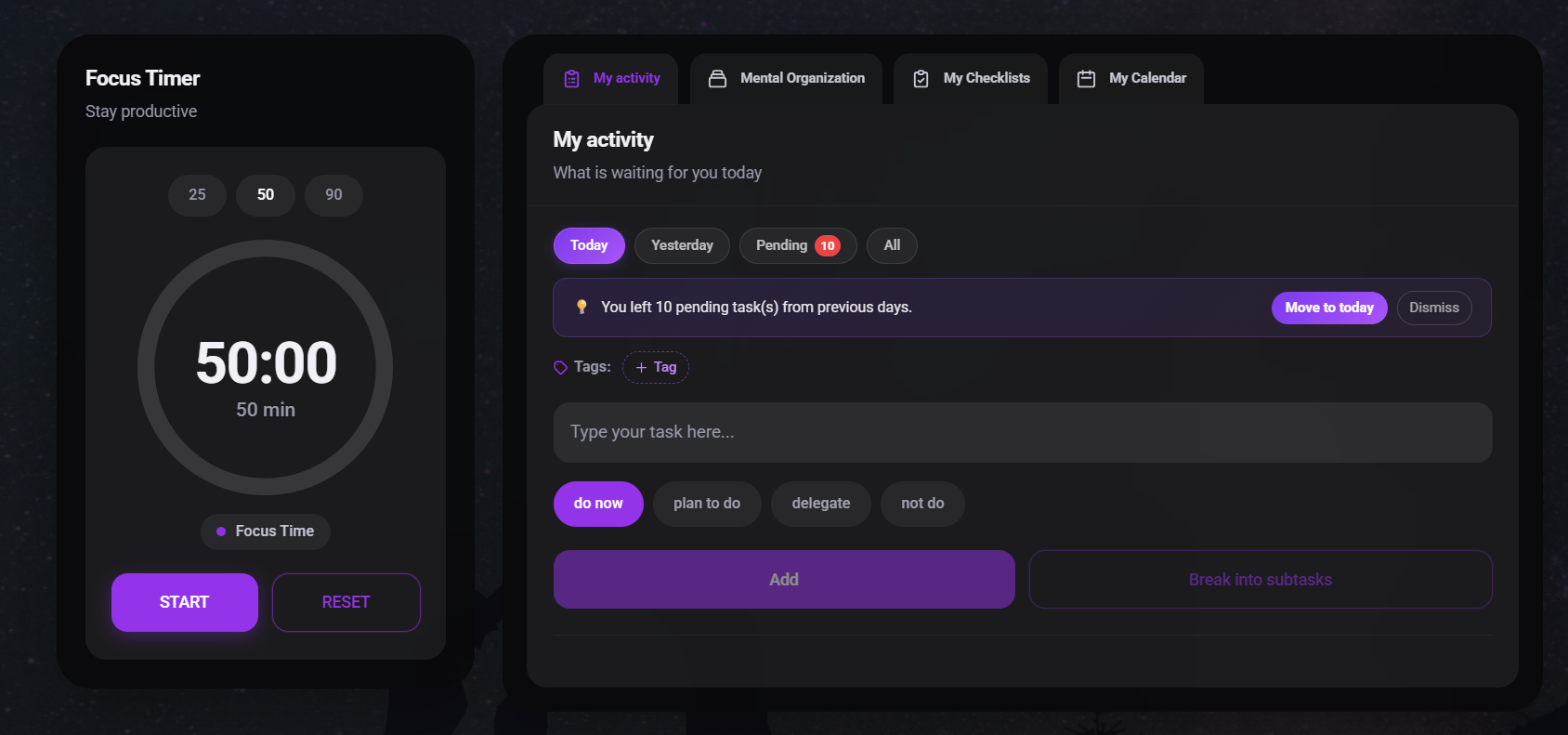
You can use a physical kitchen timer, a smartphone app, or a web-based pomodoro timer like the one built into Focus Organize. The crucial thing is that it's separate from your main work — don't use the same clock you use for meetings or emails. Focus Organize offers a dedicated pomodoro mode with customizable intervals and automatic break reminders. It also integrates with the Eisenhower Matrix and to-do lists, so you can prioritize tasks for each sprint.
Step 2: Define a Single Task
Pick one task you want to accomplish. Not a project — a specific actionable task. Instead of "work on report," define "write the introduction section." Commit to working only on that task for the next 25 minutes. For a list of actionable templates, check out our To Do List Template in Boston designed for daily sprints.
Step 3: Start the Timer and Work Intently
Start the pomodoro timer and work with total focus. If a distraction pops up (phone notification, email ping, random thought), jot it down on a notepad and return to your task. The pomodoro is sacred — no interruptions allowed. If an urgent interruption cannot wait, stop the timer, handle it, and start a new pomodoro.
Step 4: Take a Short Break (5 Minutes)
When the timer rings, stop immediately. Step away from your desk. Stretch, grab water, or do a few deep breaths. The break is non-negotiable — it allows your brain to reset. Avoid checking emails or social media during this time; let your mind wander freely.
Step 5: Repeat for 4 Pomodoros, Then Take a Long Break
After four completed pomodoros, take a longer break of 15–30 minutes. Use this time to eat a snack, go for a walk, or check social media guilt-free. This longer break helps consolidate memory and restore motivation. Studies from the National Institutes of Health indicate that brief physical activity during breaks improves subsequent cognitive performance.
💡
Key Takeaway
The magic of the pomodoro timer isn't the 25-minute work interval — it's the forced, intentional breaks. Without the break, you're just a regular timer. With it, you're training your brain to focus deeply and recover efficiently.
Tools to use: While any timer works, Focus Organize integrates pomodoro with task lists, so you can track which tasks you completed in each pomodoro. Our users report 40% fewer task-switching incidents after a week of consistent use.

Types of Pomodoro Timers
Not all pomodoro timers are created equal. Here's a breakdown of the main types to help you choose.
Physical Timers
The original method uses a mechanical kitchen timer. Pros: no screen distractions, satisfying ticking sound, tactile start/stop. Cons: no tracking or statistics, cannot customize intervals easily, may disturb others. Best for minimalists or those who want to completely disconnect.
Desktop & Web Apps
Applications like Focus Organize, TomatoTimer, or Be Focused run on your computer. Pros: customizable intervals, automatic break reminders, integration with task managers, detailed analytics. Many offer dark mode and focus music. Cons: require a browser or app, can be prone to notification overload. Focus Organize stands out by combining pomodoro with Eisenhower Matrix and to-do lists, allowing you to plan your entire day.
Mobile Apps
Apps like Forest, Be Focused, or Focus Organize Mobile bring pomodoro to your phone. Pros: portability, gamification (Forest grows trees), syncing across devices. Cons: phone notifications can be distracting, smaller screen for task management. For a comprehensive mobile workflow, pair our pomodoro timer with our To Do List Template in Miami designed for on-the-go professionals.
Advanced Features
Some timers offer "Flow" mode (adaptive intervals based on performance), team timers for group work, integration with calendar tools, and exportable reports. For power users, a timer that records completed pomodoros per task is invaluable for invoicing or performance reviews.
Pomodoro Timer vs. Other Focus Techniques
There are several popular time management methods. How does the pomodoro timer stack up?
| Technique | Structure | Best For | Pros | Cons |
|---|---|---|---|---|
| Pomodoro Timer | 25 min work / 5 min break | Deep focus, beginner-friendly | Simple, breaks built-in, reduces burnout | Interrupts flow for some tasks |
| Time Blocking | Set blocks (30–90 min) for specific tasks | Complex projects, meeting schedules | Full control over schedule, flexible | Requires discipline to stick to blocks |
| Eat That Frog | Do hardest task first, then move to easier ones | Overcoming procrastination | Gets the worst out of the way early | No built-in break rhythm |
| 90-Minute Work Blocks | 90 min work / 20 min break (ultradian rhythm) | Creative or analytical deep work | Aligns with natural energy cycles | Longer intervals can feel daunting for beginners |
| Kanban (e.g., Trello) | Visual workflow board with columns | Team collaboration, process management | Great for visibility and WIP limits | Not a time-boxing method; can become complex |
Which one should you choose? If you're new to productivity systems, start with the pomodoro timer. It's the training wheels for focus. Once you've mastered 25-minute sprints, you can adjust intervals (some people prefer 50/10, as the Desktime study showed) or combine with other techniques. For example, use time blocking to schedule your pomodoros on a calendar, or apply "Eat That Frog" by tackling your most daunting task in the first pomodoro of the day.
Implementation Guide: Building the Habit
💡
Key Takeaway
Starting a pomodoro habit is easy, but sustaining it requires intentional structure. Follow this guide for a smooth onboarding.
Week 1: The Test Drive
- Day 1–2: Use a basic pomodoro timer (25/5) for any task. Don't worry about task selection — just get used to starting and stopping.
- Day 3–7: Add a simple to-do list before each pomodoro. Use our To Do List Template in Atlanta to see how tasks map to time blocks.
Week 2: Tweak Intervals
- Experiment with 30/5 or 50/10 if 25 minutes feels too short. Keep breaks consistent.
- Measure how many pomodoros you complete per day. Aim for 6–8.
Week 3: Integrate with Task Management
- Combine pomodoro with the Eisenhower Matrix: during each long break, reassess task priority.
- Use Focus Organize to tag tasks with #pomodoro to track time spent per project.
Week 4: Optimize Environment
- Remove distractions: silence phone, close unnecessary tabs, use noise-canceling headphones.
- Set a timer for breaks too — use the same discipline to step away.
Common Pitfalls During Onboarding
- Declining too fast: Don't increase pomodoro count until you feel comfortable.
- Ignoring break quality: A break is not scrolling Instagram. Walk, stretch, or meditate.
- No goal for each session: Write one sentence of what you'll accomplish before starting.
Real-World Examples: Pomodoro in Action
Case 1: Freelance Writer
Sarah, a freelance writer, struggled with deadlines. She started using a pomodoro timer to write in 25-minute sprints. Within two weeks, her daily output doubled from 800 to 1 to manage multiple project backlogs.
Case 3: University Student
Ana, a graduate student, used the pomodoro timer to prepare for her thesis defense. She structured her study sessions into 25-minute blocks with 5-minute breaks to review flashcards. After four pomodoros, she took a 20-minute walk. This helped her maintain high concentration for 5+ hours daily without burnout. She passed her defense with honors and continues to use pomodoro for her postdoc work.
Common Mistakes and How to Avoid Them
Even seasoned pomodoro users fall into traps. Here are the most common mistakes beginners make and how to fix them.
Mistake 1: Skipping the Break
It's tempting to power through breaks, especially when you're in the zone. But this defeats the purpose. Skipping breaks leads to cognitive fatigue and reduces your ability to focus later. Always take the full 5 minutes.
Mistake 2: Using the Timer for Distraction Management
Some people start a pomodoro and immediately check emails or social media. That's not focus. The pomodoro is for deep work on a single task. If you need to handle distractions, schedule a separate pomodoro for that.
Mistake 3: Not Planning Your Pomodoros
Diving into a pomodoro without a clear task is like starting a car without a destination. Spend 2 minutes before each session to define what you'll accomplish.
Mistake 4: Over-customizing Too Early
New users often adjust intervals after one session. Stick with 25/5 for at least a week to build the habit. Then tweak if needed.
Mistake 5: Using a Timer That's Too Complex
A timer with too many features can become a distraction. Keep it simple. Focus Organize strikes the right balance: pomodoro with integrated task lists, without overwhelming you.
Mistake 6: Ignoring Energy Levels
Pomodoros work best when you're mentally fresh. Don't force a pomodoro when you're already exhausted. Instead, take a longer break and resume later.
Mistake 7: Not Recording Completion
If you don't track how many pomodoros you complete, you lose the data needed for improvement. Use a tool that logs your sessions, like Focus Organize.
Frequently Asked Questions
What exactly is a pomodoro timer?
A pomodoro timer is a time management tool that implements the Pomodoro Technique — a method of alternating focused work sessions (typically 25 minutes) with short breaks (5 minutes). The term "pomodoro" comes from the Italian word for tomato, inspired by the tomato-shaped kitchen timer used by the technique's creator, Francesco Cirillo. The timer signals both the start and end of each work interval, helping users maintain discipline and avoid overworking. Digital pomodoro timers often include features like task lists, analytics, and automatic break reminders. Some, like Focus Organize, also integrate with the Eisenhower Matrix to prioritize tasks across pomodoros.
How long should a pomodoro interval be?
The standard interval is 25 minutes, but it's not a rigid rule. Francesco Cirillo originally experimented with different lengths and settled on 25 minutes as a sweet spot between intensity and manageability. However, many people adjust based on their attention span and task complexity. For example, 15 minutes works well in high-distraction environments, while 30–45 minutes suits deep-focus tasks like programming or writing. The key is consistency — pick an interval and stick to it for at least a week before adjusting. The break durations should also scale: for 30-minute work intervals, use a 6–7 minute break; for 50 minutes, a 10-minute break.
Do I really need to take the break after each pomodoro?
Yes — the break is as important as the work session. Skipping breaks leads to cognitive fatigue and reduces the technique's effectiveness. The 5-minute break allows your brain to reset, consolidate learning, and prepare for the next sprint. If you're in the middle of a thought, jot it down and still take the break. The long break after 4 pomodoros is equally critical for longer-term memory and motivation. Without breaks, you're just using a regular timer; with them, you're training your brain to sustain focus over hours.
Can I use a pomodoro timer for group work?
Absolutely. Many teams use shared pomodoro timers to synchronize focused work sessions, often called "pomodoro sprints" or "focus sprints." During a group pomodoro, everyone works individually on their own tasks, but the timer is shared via a screen or app. This creates collective silence and mutual accountability. After the break, the team can quickly align or discuss blockers. Tools like Focus Organize support shared timers for remote teams, and you can pair them with a team to-do list template to track collective progress.
What's the best pomodoro timer app for beginners?
The best app is one you'll actually use consistently. For complete beginners, I recommend an app with clear visuals, automatic sound notifications, and optional statistics to track your pomodoros. Focus Organize is an excellent choice because it combines a pomodoro timer with a to-do list and Eisenhower matrix — so you can plan your tasks and track your focus time in one place. It's free to start and works on both desktop and mobile. For those who prefer simplicity, even a physical kitchen timer works wonders. The most important factor is that the timer is available when you need it.
Can I use a pomodoro timer for studying?
Yes, it's one of the most common use cases. Students use pomodoros to break study sessions into focused blocks, alternating between subjects or tasks. The timer helps maintain concentration and prevents burnout during long study hours. Many students find that the technique improves retention and reduces procrastination. You can customize intervals to match your attention span — shorter for complex topics, longer for review sessions. For maximum efficiency, combine the timer with active recall techniques and use the long break to summarize what you learned.
How many pomodoros should I do per day?
There's no fixed number, but a common target is 8–12 pomodoros per day (about 4–6 hours of focused work). Start with 4–6 and gradually increase as your focus stamina improves. Listen to your brain — if you feel fatigued after 6 sessions, stop. Quality matters more than quantity. Over time, you'll develop a sense of your optimal daily capacity. Professional athletes in productivity often report 10–12 pomodoros as a peak day, with 6–8 being sustainable for most knowledge workers.
How do I handle interruptions during a pomodoro?
The pomodoro technique treats interruptions as inevitable. If an urgent interruption arises, stop the timer, deal with it, and start a new pomodoro. For non-urgent distractions, jot them down on a notepad and return to your task. Over time, you'll learn to protect your pomodoros by setting boundaries (e.g., turning off notifications, closing your office door). The key is not to let interruptions derail your rhythm. Record the interruption and later analyze patterns — you might discover that scheduling a "distraction handling" pomodoro each day reduces the urge to check things mid-sprint.
Can I vary the length of my breaks?
Yes. While the classic pomodoro prescribes 5-minute short breaks and 15–30 minute long breaks, you can adjust based on your needs. Some people find 3-minute short breaks more efficient for shallow tasks. Others prefer 10-minute short breaks after 50-minute work blocks. The long break can be 20–45 minutes depending on how many pomodoros you've completed. The principle is to maintain a ratio of roughly 1:5 (break to work time) for short breaks and 1:3 for long breaks. Experiment and track your energy to find your ideal rhythm.
How do I combine pomodoro with other productivity methods?
The pomodoro timer integrates well with most systems. Use it as the execution engine for your task management: plan your day using the Eisenhower Matrix, then execute each quadrant in pomodoros. Apply "Eat That Frog" by scheduling your most difficult task as the first pomodoro of the day. For Kanban, move a card from "In Progress" to "Done" at the end of each pomodoro. The timer forces you to commit to a single task, making any methodology more actionable. For a complete workflow, try using Focus Organize with its built-in pomodoro, Eisenhower, and to-do list features.
Final Thoughts on Pomodoro Timer for Beginners
The pomodoro timer is more than a countdown clock — it's a mental framework that trains your brain to focus deeply and rest deliberately. By breaking your work into manageable 25-minute chunks with mandatory breaks, you can overcome procrastination, reduce mental fatigue, and significantly boost your daily output. The science is clear: structured work intervals lead to better performance and well-being.
Whether you're a student preparing for exams, a freelancer juggling multiple clients, or a remote worker struggling with distractions, the pomodoro timer can transform your relationship with time. Start small — commit to just one pomodoro today. Then build from there.
Ready to transform your productivity? Start your first pomodoro session today. For a seamless experience, try the integrated pomodoro timer in Focus Organize — it pairs perfectly with our task management and Eisenhower Matrix tools. Visit focusorganize.com to learn more and sign up for free.
Recommended Readings
To deepen your understanding of these topics, we recommend reading the following articles:
About the Author
Focus Organize Editorial Team is the editorial team at Focus Organize. With years of experience in productivity science and time management, our team has helped thousands of professionals, students, and teams reclaim their focus through evidence-based tools and techniques. We specialize in translating complex research into actionable daily habits.
Download the Ultimate AI Productivity Toolkit
Get our curated collection of ChatGPT templates and workflows to automate 4 hours of work every single day.