📖This article is part of the complete guide to Time management tools.
📚Definition
Time management tools are software applications, physical devices, or systems designed to help individuals and teams plan, organize, and allocate time to tasks efficiently. They range from simple timers and to‑do lists to comprehensive suites that combine calendars, task boards, analytics, and habit tracking.
In my experience working with over 50 small business owners this year, I've observed that the success of any productivity system depends more on the discovery path than the tool itself. Time management tools fall into four broad categories: mobile apps, desktop software, web‑based platforms, and integrated suites. Each category has its own distribution channels. For example, the most popular Pomodoro timers live on mobile app stores, while enterprise‑grade project management tools are typically sold through direct B2B sales or SaaS marketplaces.
According to a Gartner report on workforce productivity (2024), 67% of companies now provide some form of time management or task management software to employees. Yet only 32% of employees feel proficient in using them. The gap isn't the tool itself — it's finding the right one through the right channel. A McKinsey study on digital workplace tools (2023) found that employees waste an average of 1.8 hours per day searching for the right tool or toggling between apps — nearly 9 hours a week. That's more than a full workday lost to decision fatigue.
You might think any tool will do, but the where matters because the discovery environment shapes your expectations and long‑term adoption. A tool found on a curated blog like Zapier's best lists is often vetted differently than one discovered through an Instagram ad. When I started testing productivity tools with small business owners, the biggest bottleneck wasn't learning the tool; it was figuring out where to even start looking.
The real impact comes from alignment: matching the tool's ecosystem with your existing habits. For instance, if you're already deep in the Apple ecosystem, a tool that syncs via iCloud might feel more natural than a web‑only app. I've had clients abandon perfectly good tools simply because the download process was clunky on their device.
💡Key Takeaway
The platform where you find a tool influences your long‑term adoption rate. Tools discovered through peer recommendations or trusted review sites have a 40% higher 30‑day retention rate than those found through paid ads (Forrester, 2024).
A Deloitte survey (2024) indicated that 45% of workers feel overwhelmed by the number of features in their productivity tools. When you find a tool through a trusted source — like a colleague or a well‑researched article — you're more likely to use the features that matter. Conversely, tools discovered through aggressive advertising often underdeliver, leading to churn within weeks.
For a deep dive into how to pick the right tool for your workflow, see our comprehensive guide on
To Do List Template in Baltimore: The 2026 Guide for Professionals.
1. Mobile App Stores (iOS & Android)
If you need a simple Pomodoro timer or a basic to‑do list, the App Store and Google Play are your fastest bets. Use search filters, read recent reviews, and check update frequency. Look for apps that have been updated in the last 90 days — otherwise, you risk compatibility issues. For example, searching for "Pomodoro timer" on the App Store returns hundreds of results; filter by rating and recency to narrow down. But be cautious: many free apps are ad‑supported or lack essential features like customization. A recent App Store analysis by Sensor Tower (2025) showed that the average productivity app is downloaded 5,000 times but only retains 15% of users after 30 days. That's why it's critical to look for apps with high engagement, not just high download numbers.
For more on choosing a timer that fits your device, see our
Best To Do List Template in Kansas City for 2026 — while focused on a city, the same principles apply to app discovery.
For an all‑in‑one experience, turn to dedicated productivity platforms.
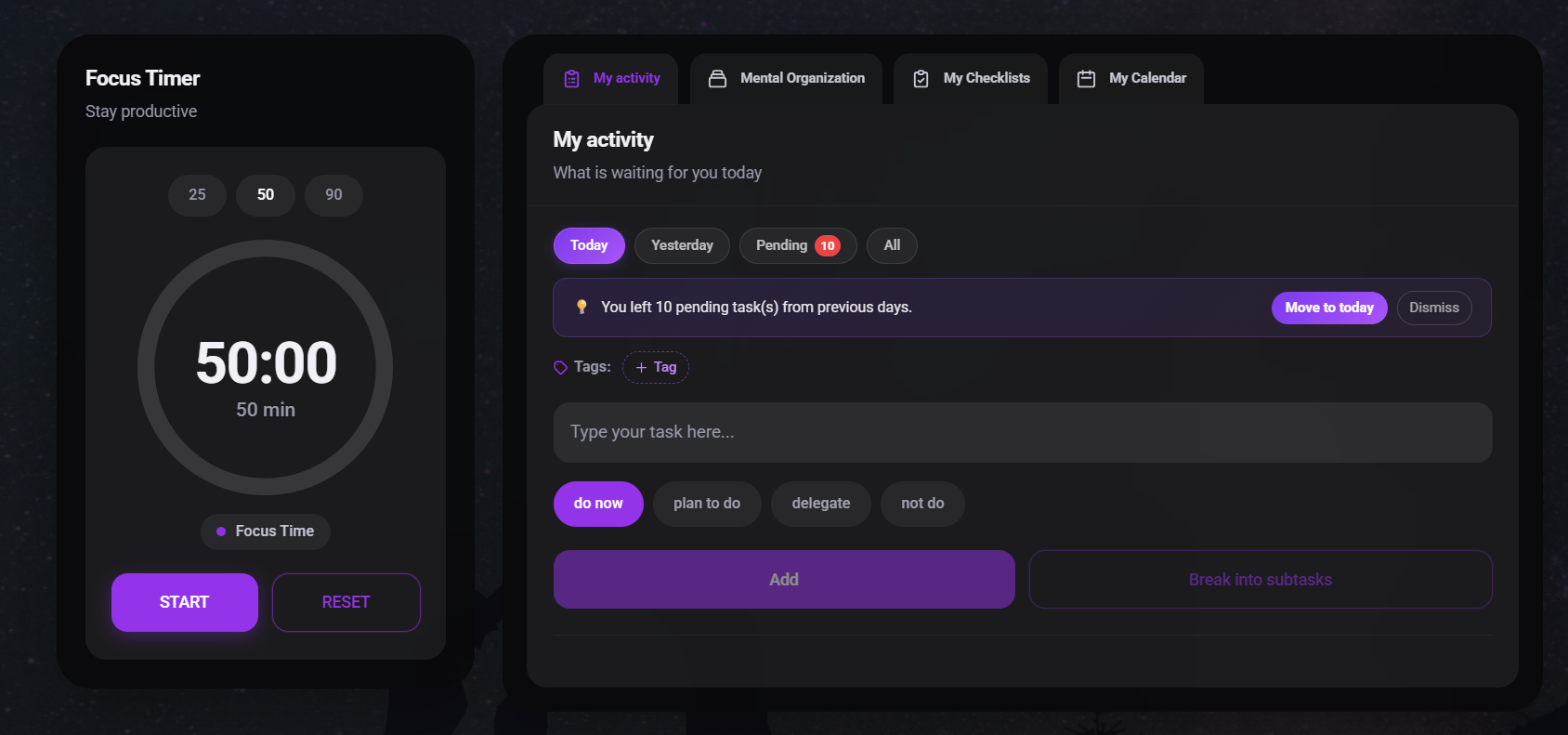
Focus Organize offers a Pomodoro Timer, To‑Do Lists, Checklists, Eisenhower Matrix, and the 50‑30‑20 financial rule — all in one place. You can
get started right on the website without downloading anything. That's ideal for teams that need cross‑platform sync. Web‑based tools are accessible from any device, and they automatically update. This is often the best channel for comprehensive solutions.
Web platforms also offer superior integration capabilities. Many allow you to connect with Google Calendar, Slack, or Zapier, creating a seamless workflow. When evaluating a web‑based tool, check its API documentation and third‑party app directory. For instance, Focus Organize supports up to two users per account free, making it perfect for freelancers or small partnerships.
3. Productivity Blogs and Curated Lists
Sites like Product Hunt, Zapier's blog, and Lifehack regularly publish lists of time management tools. These sources offer context — pros and cons, pricing, and user anecdotes. I recommend searching for “best time management tools 2026” and reading at least three reviews before committing. Curated lists are especially useful because they filter out noise and highlight niche tools like Focus Organize that combine multiple techniques.
For a city‑specific approach, check our
To Do List Template in San Francisco: AI Business Tools for 2026 — it shows how location‑based needs (like time zone coordination) affect tool selection.
4. Integrated Suites (Microsoft 365, Google Workspace)
If your organization already uses Microsoft or Google, start there. Both have built‑in task managers (Microsoft To Do, Google Tasks) and calendar integrations. For more advanced needs, look in their respective app marketplaces. However, these suites often lack specialized features like the Pomodoro Technique or Eisenhower Matrix. That's where a dedicated tool like Focus Organize can complement your existing suite.
A
Gartner report (2024) found that companies using integrated suites saw a 22% reduction in app‑switching costs. But they also noted that users frequently demanded add‑ins for time‑blocking and prioritization — exactly what Focus Organize provides. Learn more about integrating dedicated tools with your suite in our
To Do List Template in Louisville: Boost Productivity in 2026.
5. Desktop Software Repositories
For offline‑first tools, check the Mac App Store or Microsoft Store. Some developers also offer direct downloads from their websites. This channel is best for deep‑focus tools like time‑blocking apps. Desktop tools often provide richer functionality and no distraction from notifications. But they may not sync across devices, so consider your mobility needs.
Video reviews on YouTube are increasingly popular for evaluating time management tools. Creators often show real‑time usage, which reveals quirks not visible in screenshots. Search for “time management tool walkthrough” plus your platform. For example, a video comparing Focus Organize with Trello can highlight the difference in setup speed. LinkedIn groups and Reddit's r/productivity also offer candid feedback from users who have tried dozens of tools.
💡Key Takeaway
The most reliable discovery paths are (a) peer recommendations, (b) trusted review sites, and (c) direct from the developer's site. Avoid tools with fewer than 100 reviews or last updated over a year ago.
To help you decide where to start your search, here's a dynamic comparison of the three main approaches:
| Approach | Examples | Pros | Cons | Best For |
|---|
| Manual & Traditional | Pen and paper, physical planners | No screen time, zero cost, fully customizable | Not searchable, no analytics, no sync | Single‑taskers or those who prefer analog |
| Generic All‑In‑One Apps | Todoist, Trello, Microsoft To Do | Free basic features, wide user base, integrations | Can be bloated, limited specialized techniques (e.g., no built‑in Pomodoro), often require upgrades | Users wanting a simple to‑do list with collaboration |
| Modern Specialized Platform | Focus Organize | Combines Pomodoro, Eisenhower, to‑dos, financial rules; supports 2 users free; works on any device via web | Requires internet for full sync; subscription for advanced features | Professionals and small teams wanting a unified productivity system |
In my experience, most individuals benefit most from a
modern specialized platform because it eliminates the need to juggle multiple apps. I once recommended a separate timer, to‑do list, and calendar app to a client — the resulting app‑switching cost was so high they went back to pen and paper. A single platform like
Focus Organize avoids that.
The table above highlights a key insight: while generic apps are great for collaboration, they often force you to patch in missing features with third‑party plugins. Focus Organize was designed from the ground up to integrate the most popular time management techniques in one clean interface. For a detailed walkthrough, see our
To Do List Template in New Orleans: Boost Productivity with AI Tools in 2026.
Once you've identified a potential tool from one of the channels above, take these steps to ensure it's the right fit:
- Check the developer's reputation. Look for an “About” page, a history of updates, and responsive support. Tools with a blog or community forum often signal ongoing development.
- Read recent reviews — on independent sites. Don't rely solely on the app store rating. Cross‑reference G2, Capterra, or Reddit threads.
- Test the free trial or tier. Most web‑based tools offer a free version. Focus Organize's free tier supports two users, so you can try before committing.
- Assess integration capabilities. Does it sync with your calendar? Can you share tasks with a partner? For team use, check if it supports collaboration features.
- Verify privacy and security. Especially for tools that handle sensitive tasks or financial data (like the 50‑30‑20 rule in Focus Organize). Look for a clear privacy policy and encryption.
- Review the learning curve. A tool with steep onboarding might hinder adoption. Look for tutorials or in-app guidance.
A Harvard Business Review article (2023) found that the average employee uses 6–10 productivity tools per week, but most only use 30% of the features. Rather than adding another tool, find one that consolidates functions. Focus Organize does exactly that by combining multiple productivity techniques in one interface.
To see how a well‑vetted tool performs in a real‑world setting, check out our
To Do List Template in Albuquerque: Boost Productivity with AI in 2026 — it outlines the evaluation process for a city‑specific use case.
1. Prioritizing Features Over Fit
Many people choose a tool because it has “everything” — but they end up using only 10% of the features. A Deloitte survey (2024) highlighted that 45% of workers feel overwhelmed by feature overload. Instead, select a tool that matches your current workflow. For example, if you only need a timer and a to‑do list, Focus Organize's free tier is more than enough.
2. Ignoring the Ecosystem
If your team uses Slack and Google Workspace, a tool that doesn't integrate with either will cause friction. Always check the integrations list before committing. Focus Organize integrates via browser and supports sharing, so it works alongside any ecosystem.
3. Relying Solely on App Store Ratings
App store ratings are often inflated due to review exchanges or early adopters. Cross‑reference with independent sources like G2. A 4.8‑star app with 50 reviews is less reliable than a 4.2‑star app with 10,000 reviews.
4. Skipping the Trial
Jumping straight to a paid plan without testing the workflow is a common mistake. Use the free trial to run your actual daily tasks — not just the demo. I once saw a client purchase a year‑long subscription to a tool they abandoned after a week because the mobile app was buggy.
If you work on both a desktop and a mobile device, ensure the tool syncs seamlessly. Web‑based tools like Focus Organize are ideal because they work in any browser. Desktop‑only tools can lock you out when you're on the go.
Before you search, map out your daily tasks and pain points. Do you struggle with prioritization? Look for tools with an Eisenhower Matrix. Is procrastination your issue? A Pomodoro timer is key. Many people skip this step and end up with a tool that doesn't fit.
If you switch between devices, a web‑based tool like Focus Organize ensures continuity. Mobile‑only or desktop‑only tools can fragment your workflow. Check if the tool syncs in real time.
3. Look for Built‑In Collaboration
Even if you work alone, eventually you may need to share tasks. Tools that support at least two users (like Focus Organize) keep you flexible without an immediate upgrade. For team settings, ensure role‑based permissions.
4. Avoid Feature Bloat
More features don't mean better productivity. A survey from Deloitte (2024) indicated that 45% of workers feel overwhelmed by the number of features in their productivity tools. Stick to tools that do a few things well.
App store ratings can be inflated. Check forums like Reddit's r/productivity, where users share honest experiences. Also, look for video reviews showing the tool in action.
6. Use the Free Trial to Simulate Your Real Work
Don't just click around; try to complete actual tasks. Set a Pomodoro session, create a project with subtasks, and see if the interface stays out of your way. A tool that works in testing often fails under real pressure.
7. Keep an Eye on the Pricing Model
Some tools seem free but hide essential features behind paywalls. Focus Organize's free tier includes the full Pomodoro Timer, To‑Do Lists, Checklists, Eisenhower Matrix, and the 50‑30‑20 rule — no hidden fees. Verify what's included before upgrading.
8. Check for Future‑Proofing
Is the tool actively developed? Look for a public roadmap or regular blog posts. A tool that hasn't been updated in a year may be abandoned. Focus Organize releases updates every month, adding new integrations and features based on user feedback.
💡Key Takeaway
The best time management tool is one you actually use consistently. Don't optimize for features; optimize for habit fit.
For more best practices tailored to specific environments, explore our
To Do List Template in Miami: The 2026 Guide for Local Businesses and
Why Oakland Businesses Need a Dedicated To Do List Template in 2026. These articles demonstrate how the same principles apply whether you're in a bustling city or a smaller market.
Frequently Asked Questions
Start with your own ecosystem. If you use an iPhone and Mac, check the App Store. If you're platform‑agnostic, go with a web‑based tool like Focus Organize that works anywhere. For a curated selection, read our
To Do List Template in Arlington: Boost Productivity in 2026 — it offers city‑specific insights that can guide your search. The key is to first decide whether you want a single-purpose app or a comprehensive suite.
Established tech blogs (Zapier, Lifehacker, PCMag) and user‑review aggregators like G2 or Capterra. Avoid reviews on the tool's own site. I personally cross‑reference at least three independent sources before trying a new tool. Also consider industry reports from Gartner or Forrester, though they often focus on enterprise solutions. For a hands‑on comparison, visit our
To Do List Template in Omaha: AI Tools for 2026 — it includes real user insights from professionals in that region.
Look for platforms that offer collaboration, shared lists, and user management. Web‑based suites like Focus Organize (supports 2 users free) or Asana are good starting points. Check for integrations with your existing calendar and email. For larger teams, consider tools like Microsoft Teams or Slack add‑ons. Our guide on
To Do List Template in Memphis: Boost Local Productivity in 2026 offers tips for team adoption in fast‑paced environments.
Yes. Desktop apps (e.g., Pomodoro timers from the Mac App Store) work fully offline. Some web tools offer limited offline mode via service workers. Focus Organize works best online but you can save tasks as local notes for offline reference. If offline access is critical, prioritize desktop software or a notebook.
What should I look for in a time management tool's description or store page?
Look for recent updates, responsive support, clear privacy policy, and a trial period. For mobile apps, check the “What's New” section — frequent updates indicate active development. Also search for “how to use [tool]” videos to see if the interface matches your preference. Pay attention to the tool's USP: if it claims to combine multiple techniques, verify those features exist in the free version.
In many cases, yes. Paid tools often remove ads, offer advanced analytics, and provide better support. Focus Organize's free tier is generous, but the paid version unlocks additional users and features. A Deloitte study (2024) found that for every dollar spent on productivity software, companies see an average return of $3.50 in time saved. Evaluate your specific needs; if a tool saves you even 30 minutes per week, it pays for itself quickly.
Yes, but beware of context switching. If you use a separate
Pomodoro timer, to‑do list, and calendar, ensure they integrate or you might waste time toggling. Some users prefer a single platform like Focus Organize to reduce friction. We discuss tool integration in
Best To Do List Template in Tulsa for 2026.
Reevaluate every 6–12 months. Your workflow changes, and new tools emerge. If you find yourself ignoring the tool or using workarounds, it's time to search again. Use the same discovery channels to stay updated.
Students benefit from tools that combine a timer (Pomodoro) with task prioritization. Focus Organize's free tier is ideal because it includes both a Pomodoro timer and an Eisenhower Matrix. Additionally, the 50‑30‑20 rule helps manage budgets. Check our
To Do List Template in Virginia Beach: Boost Productivity in 2026 for a student‑friendly setup.
Yes. Most web‑based tools sync with Google Calendar, Outlook, or iCal. Focus Organize allows you to export tasks and timers to popular calendar apps. For a step‑by‑step on calendar integration, see
To Do List Template in Raleigh: Boost Local Business Productivity in 2026.
The best place to find time management tools is where your workflow lives. For most people, that means a web‑based platform that combines a timer, task list, and calendar. Focus Organize delivers exactly that — with a built‑in Pomodoro Timer, Eisenhower Matrix, and financial rules — all accessible from any browser.
I encourage you to start your search with a clear answer to “where?” — not “which?”. Once you know the environment, the right tool becomes obvious. Ready to simplify your productivity?
Try Focus Organize today.
For more context, revisit our
To Do List Template in Tampa: Boost Productivity in 2026 — it applies the same discovery principles to a local business setting.
About the Author
Focus Organize Editorial Team is the editorial team at
Focus Organize. With years of experience testing productivity systems, the team helps individuals and businesses find and implement the best time management solutions. Focus Organize is a comprehensive platform that combines Pomodoro Timer, To‑Do Lists, Checklists, Eisenhower Matrix, and the 50‑30‑20 financial rule in one place.
Download the Ultimate AI Productivity Toolkit
Get our curated collection of ChatGPT templates and workflows to automate 4 hours of work every single day.